We have a penchant for old-school gaming here at Comrade’s Wargames, so it shouldn’t surprise anyone that I’ve been eager to try out Shadow War: Armageddon ever since I came across some blog posts and Youtube videos about how it’s been rediscovered lately as a diamond in the rough.
Now, don’t get me wrong — Shadow War isn’t an old game, per se. It was released in 2017, just before the debut of the revamped 8th edition of Warhammer 40,000. But it’s imbued with a certain old-school sensibility that appeals to me greatly. How, you might ask?
- It’s essentially a re-skin of the venerable and popular Necromunda skirmish ruleset, which itself is derived from 2nd edition Warhammer 40k.
- In my opinion, 2nd edition 40k is a lousy ruleset for army-scale games, but it’s ideal for skirmish level games, where each players controls about a dozen (or fewer) figures. The super granular statline for a typical figure makes sense when you’re only controlling a handful of dudes.
- It’s one of the last (if not possibly the last) of GW’s one-book-is-all-you-need titles. The main book contained everything: core rules, army lists, advanced rules, campaign systems, etc. There were no extra books to buy, at all, ever. (Now you can see why GW has no interest in this type of approach.)
- The core rulebook contains a dozen army lists covering most 40k armies, making it trivial to get players of all stripes interested in trying out the game.
Lately, as the increasing cost of models and rapid pace of rulebooks and supplements has increased the barrier for entry to the Warhammer hobby, players like me have been rediscovering older rulesets like Shadow War: Armageddon. To further illustrate the Venn diagram for you: I’m an avid enjoyer of One Page Rules, so I’ve never really been a participant in the current GW treadmill approach to game editions and rules supplements.
Anyway, enough of that preamble! You came to hear about the game, right?
John, Jim, and I got together last weekend to try out Shadow War: Armageddon. The core book doesn’t explicitly include rules for multiplayer games, but we are seasoned veterans of the wargaming hobby, so it was simple to adapt one of the rulebook scenarios to incorporate three players, all competing to accomplish little mini-missions on the tabletop.
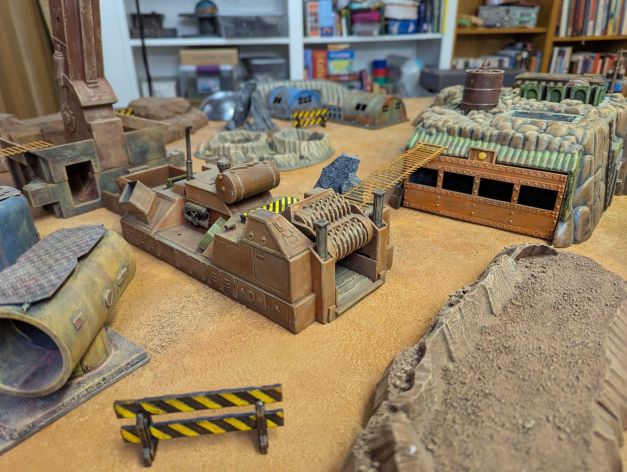
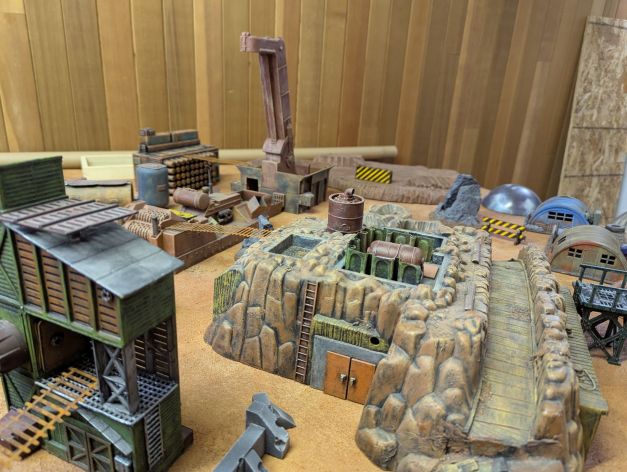
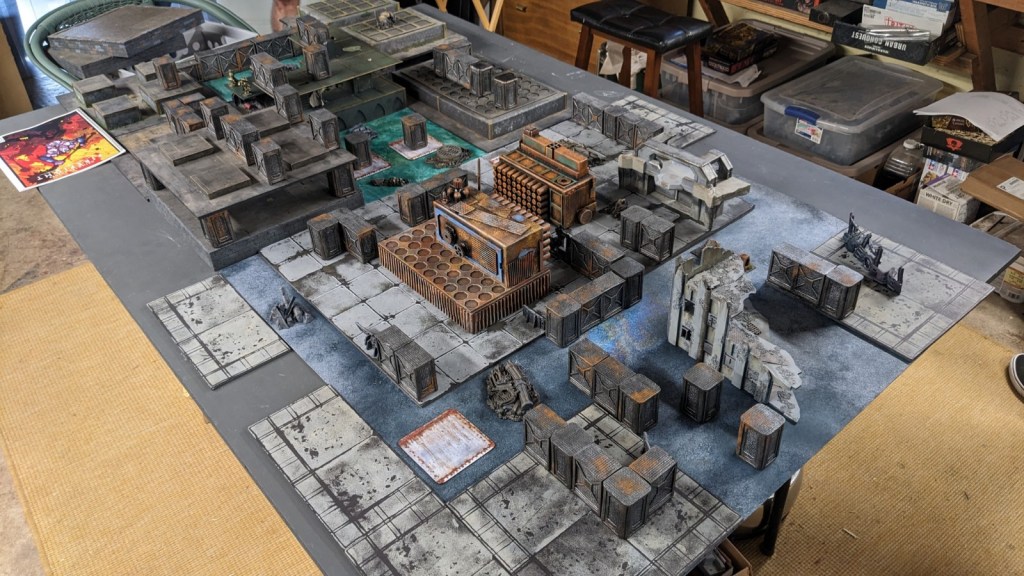
I set up a dusty, windswept desert battlefield replete with craggy rock formations and rusted industrial equipment. Here’s a look at the setup.
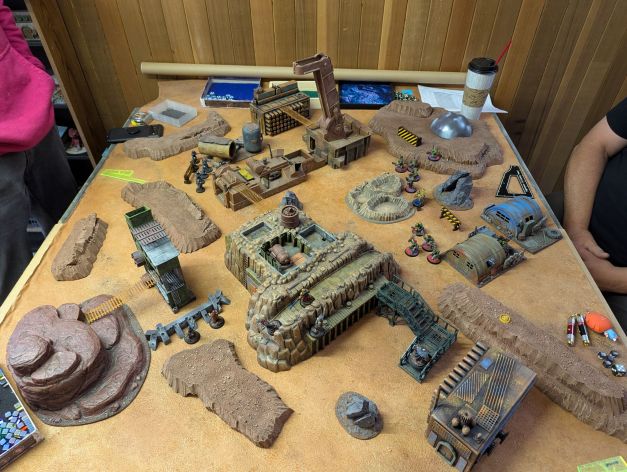
We played on a 4×4 battlefield, as advised in the rulebook. Weapon ranges are fairly short, and we concluded after the game that a 3×3 battlefield could easily have sufficed, even for our three-player game.
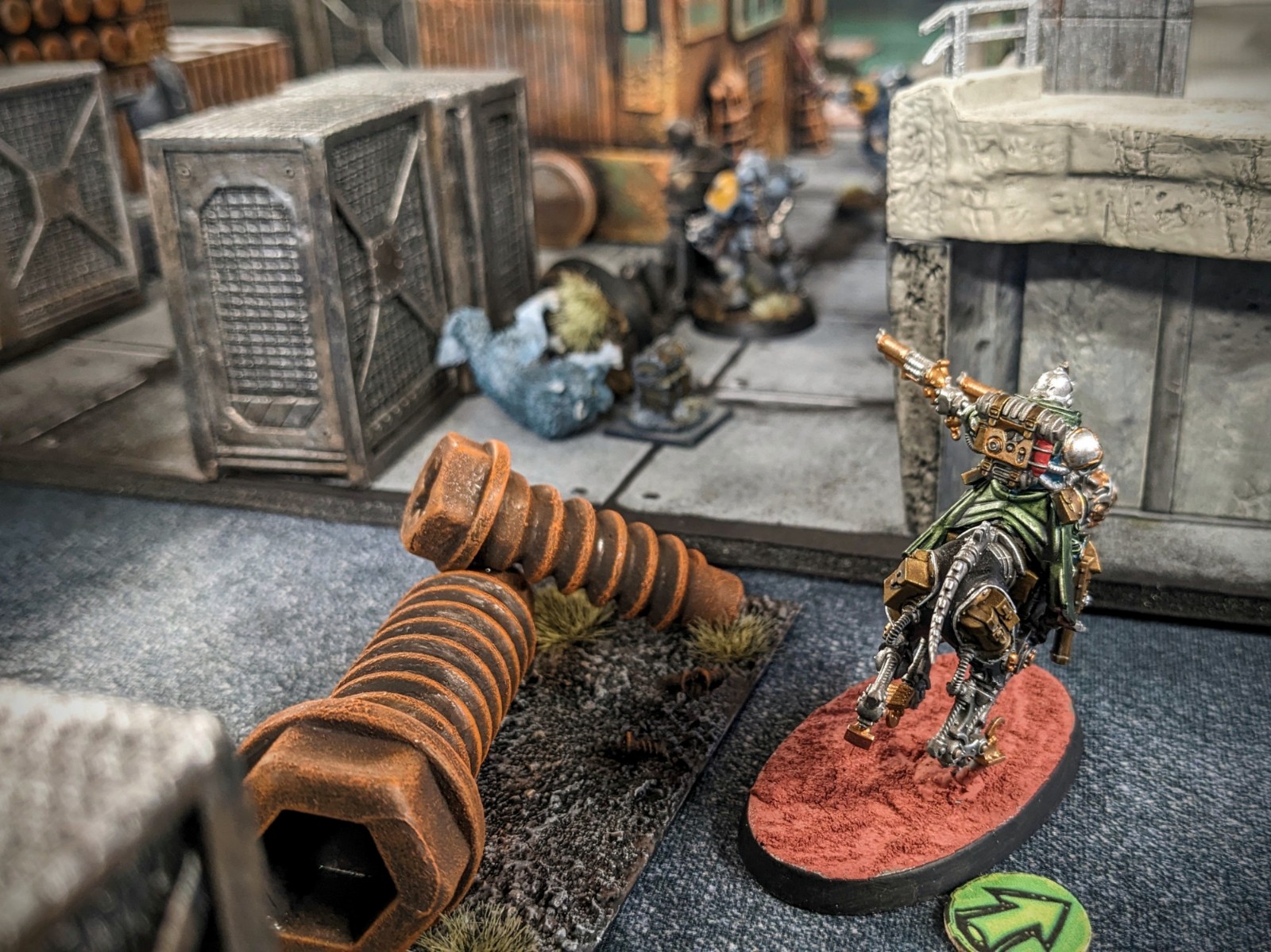
John fielded his grubby little Imperial Guardsmen, and Jim brought a stupendous number of Orks – 11 figures in total, I think. Contrast that with my Inquisitorial warband, which numbered 6 models. Yikes! Here’s a look at our factions as we started the game.


Prior to deployment, each player received a randomly determined mission objective.
John’s Guardsmen were trying to get across the board and exit from an opposing player’s deployment area.
Jim’s Orks were trying to blow up a tank of promethium (the 40k equivalent of natural gas + gasoline + napalm, all mixed together and used for a variety of purposes).
My Inquisitor was trying to isolate and assassinate the Ork warboss.

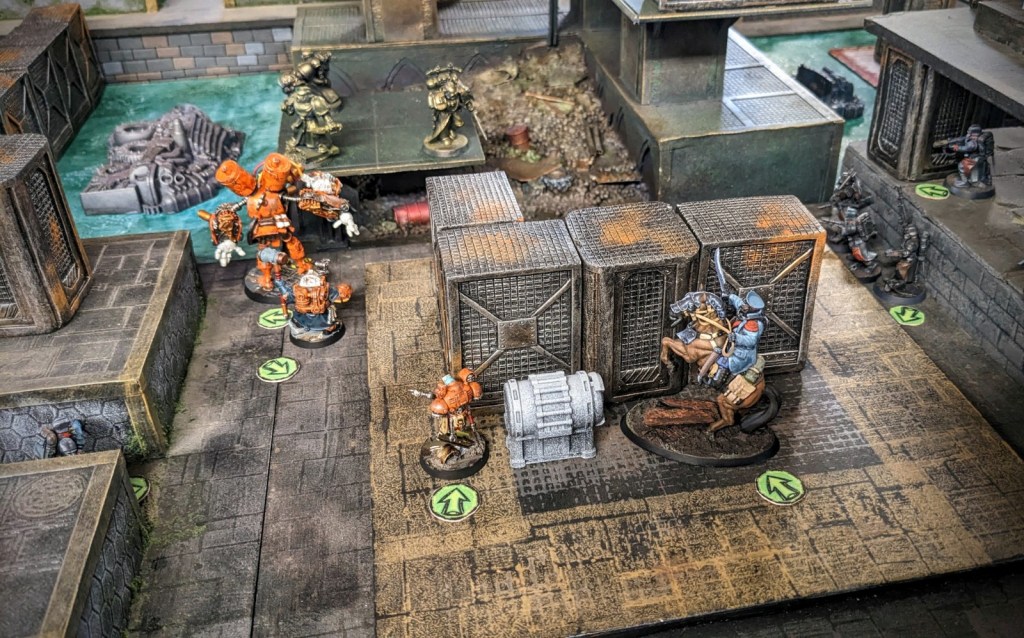
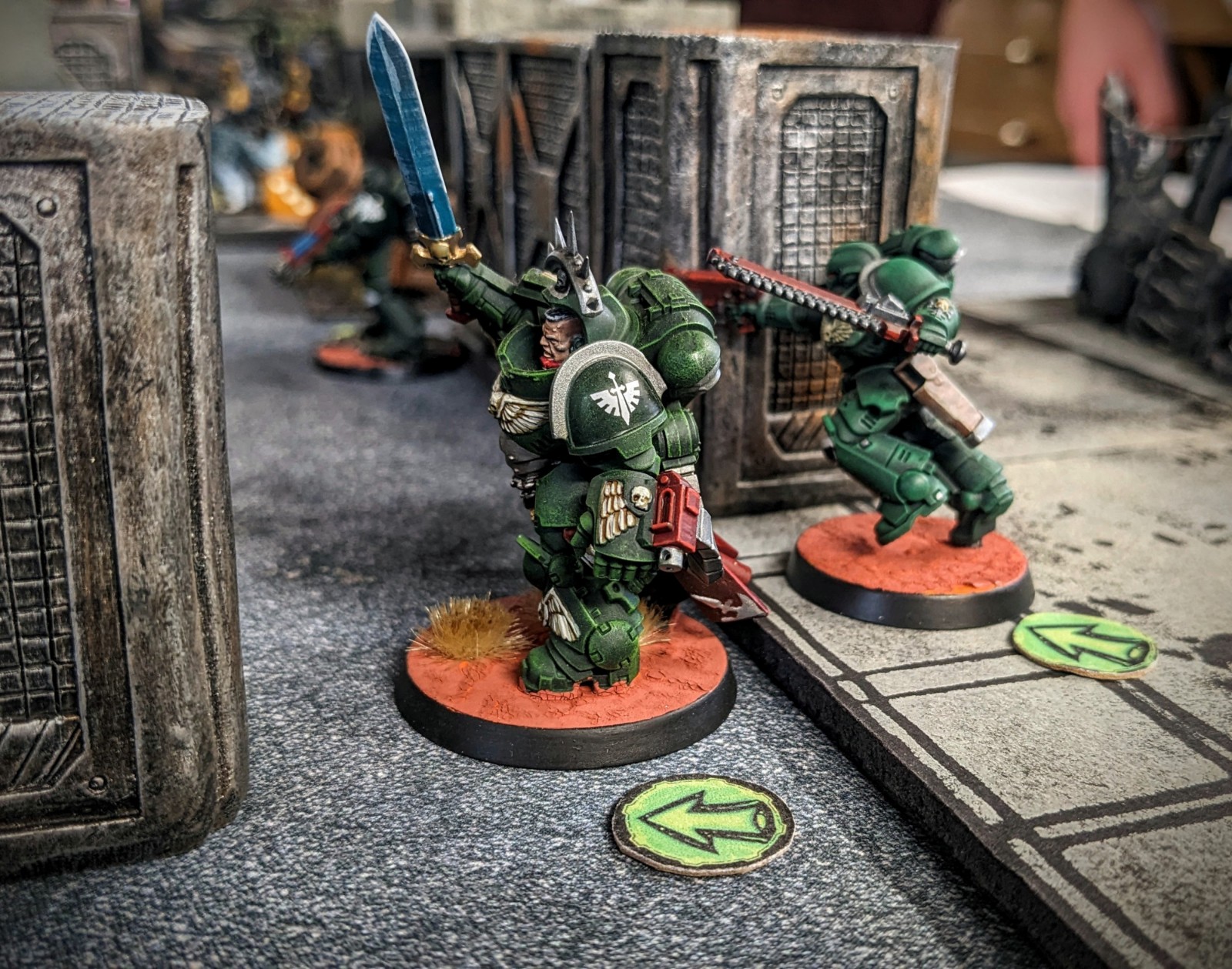
The game started with John’s Guardsmen moving purposefully through a narrow defile on the left flank of the industrial facility. They used the overwatch rule from Shadow War: Armageddon to great effect to cover their approach.
Waiting to meet them were Jim’s Orks, of course! He couldn’t just let those Guardsmen jog across the field unopposed.

The upcoming clash in this dusty back alley was one for the books. Stay tuned!
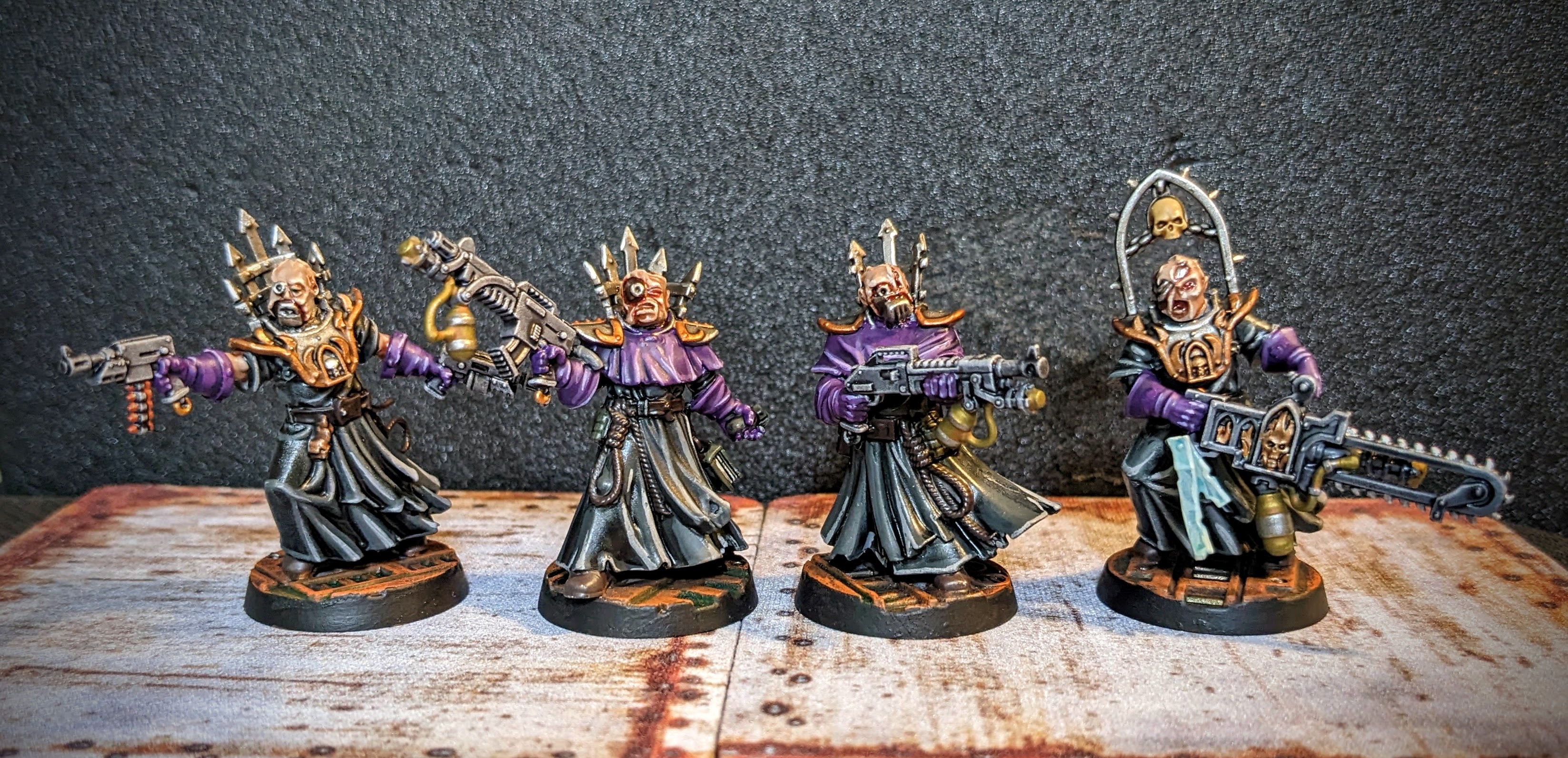
Meanwhile, Inquisitor Coteaz sent his warband up onto the central terrain feature — a craggy bunker defended by a trench and topped with (you guessed it) some promethium tanks.
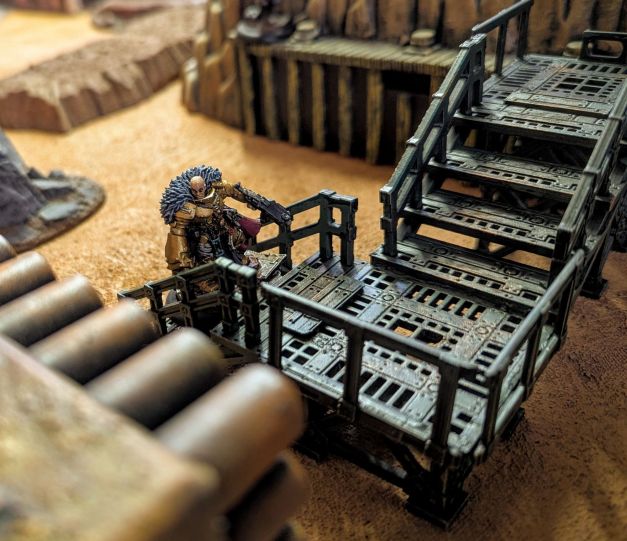

From this perch, they could watch both of the opposing warbands as they jockeyed for position in the outskirts of the facility. I knew the Orks had to come my way to accomplish their mission, but I also didn’t want Jim to have to face John’s Guardsmen alone! So, in a burst of tactical genius, I split up my forces. You’ll see later how this played out for me.
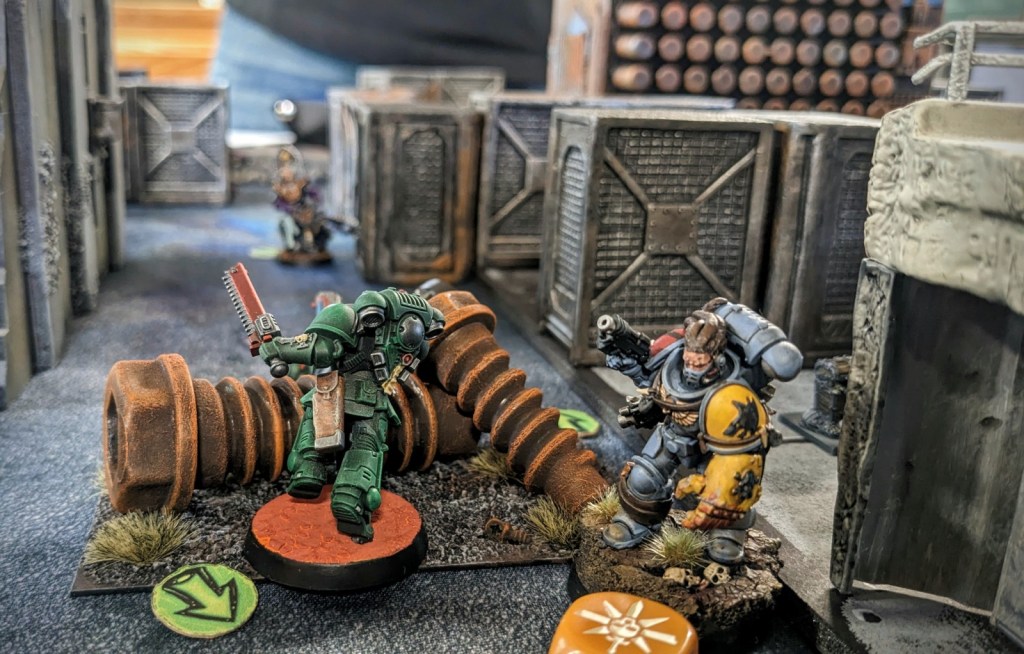
But first — back to that alley. The Guardsmen were creeping along, covering their advance with overwatch, when suddenly a mob of Orks burst forth and charged them in true orky fashion!
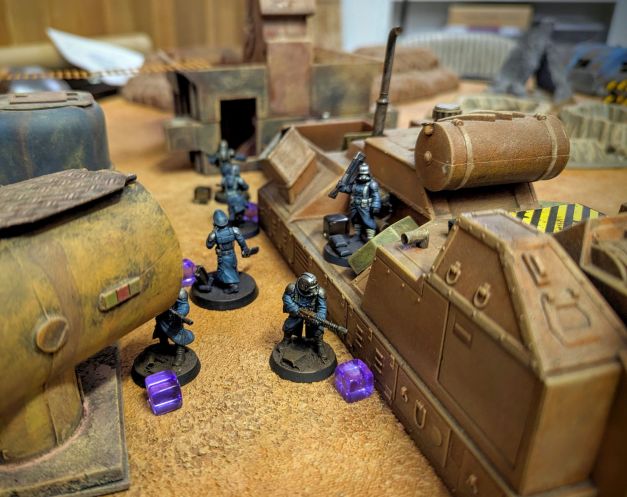

It was an absolute bloodbath for the Orks. We learned a lot about the casualty system in Shadow War: Armageddon. You aren’t outright dead when you take a wound, but most of the time you’re in very bad shape, with just a slim hope for recovery on the battlefield.
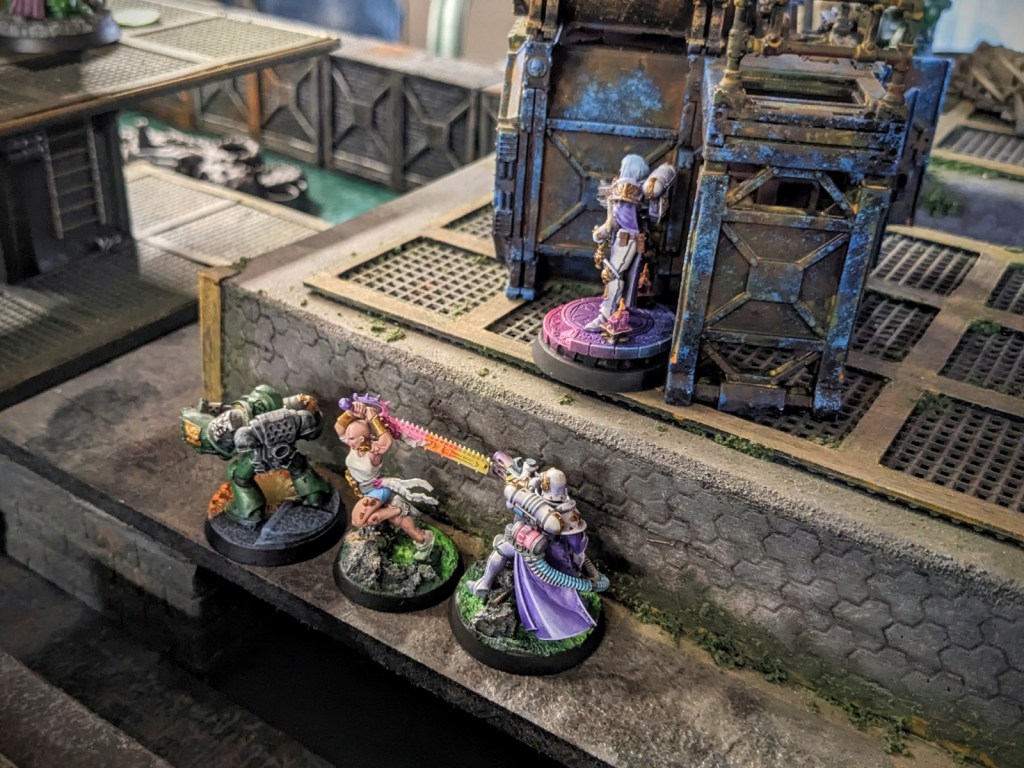
Over by the promethium tanks, a brawl was developing as Jim charged his Orks up to assault the trench line. I had two models available to defend — Interrogator Lysander Frost and Virgil the Huntsman, who was armed (fortuitously) with a flamethrower.

As this bloodthirsty scrum was developing, Jim’s warboss bravely stepped out of hiding and entered the fray. He started by throwing grenades, then decided to wade into combat and try to draw off some Inquisitorial acolytes.
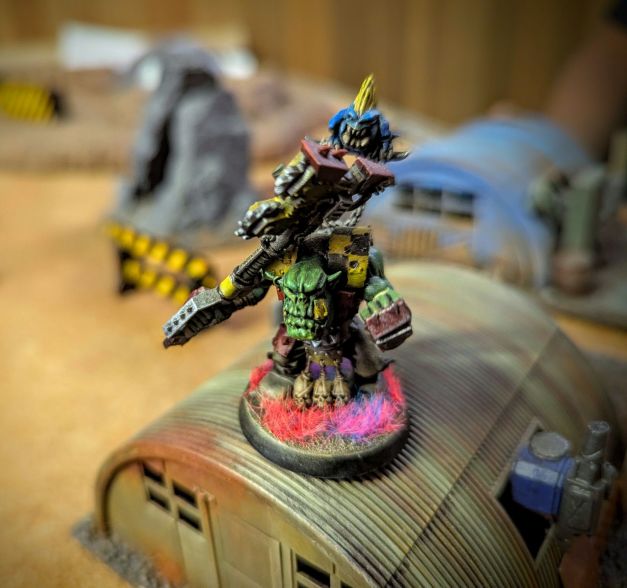
As it happened, the warboss ended up within charge range of Inquisitor Coteaz! This was literally my game objective — slay the opposing leader! I couldn’t let a chance like this pass by.

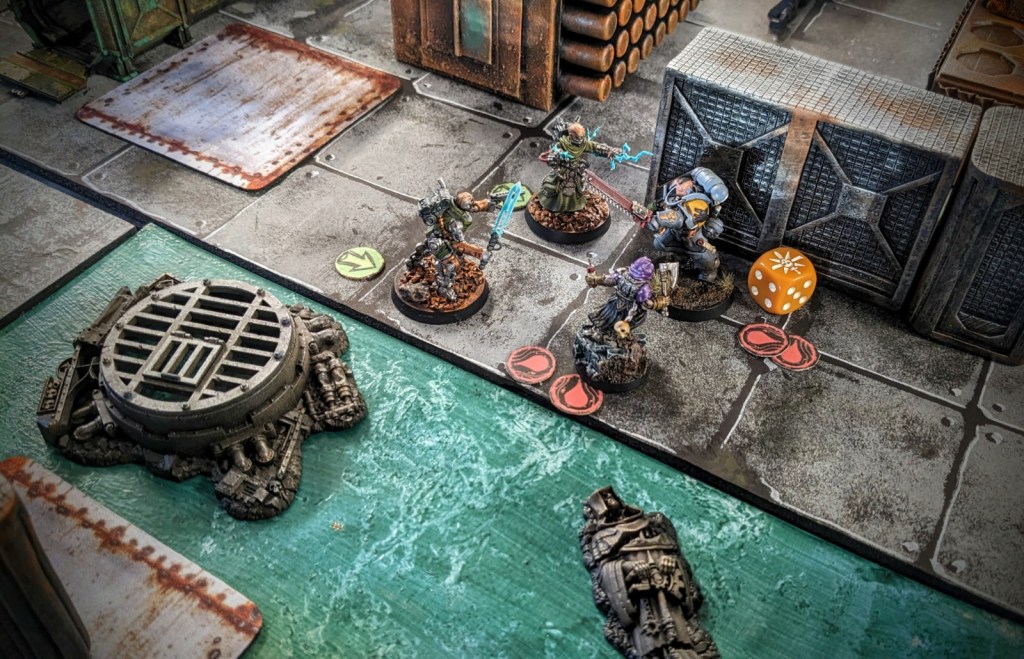
Throwing caution to the wind, Inquisitor Coteaz raced into combat against the warboss. For a turn or two, it was a fair fight… we traded blows but no one seemed to gain the upper hand. Once some more Ork boyz joined the fray, things went sideways quickly for the Lord Inquisitor.
Here’s his final stand, just before he was cut down in single combat.

Luckily, his broken body was spirited away by Interrogator Lysander, to be healed and restored to the Emperor’s service.
In doing so, Lysander’s attention was taken away from the Ork boyz scrambling up the hill toward the promethium tank. Oops!

All it took was a tiny little distraction to seal the deal for Jim’s Orks. This silly Ork warrior blew up the promethium tank in a fiery explosion, ensuring victory for the greenskins even as the Imperial factions retreated to lick their wounds.
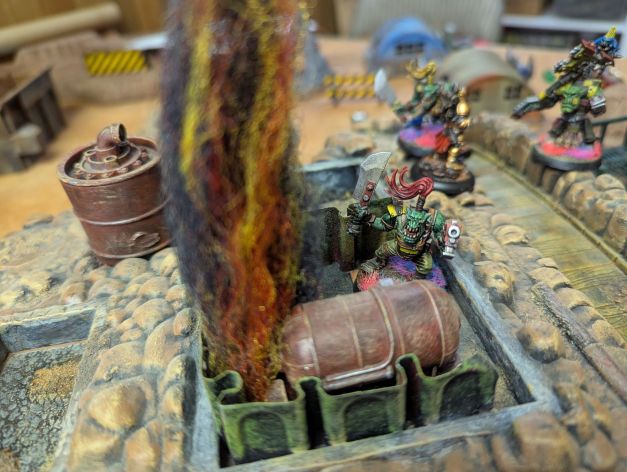
Feedback from the guys for Shadow War: Armageddon was generally positive. “It definitely scratched an itch,” was how Jim put it after the game. SW:A had all the accoutrements that would normally turn me off from a GW game: super granular stats for figures, weird corner case rules like ammo rolls and crawling 2″ per turn when wounded, inexplicable wargear missing from the army lists.
But I’ll be honest with you — it works. The whole package plays smoothly and is imbued with a healthy dose of nostalgia. The clunky parts are a glorious love letter to earlier editions of Warhammer 40k. And it’s such a small scale game that you just don’t mind flipping through the rulebook to uncover mundane rules for grenade deviation or melee attacks on pinned models.
For me, the most appealing factor is the “one rulebook is all you need” approach. The rulebook is out of print, but PDFs can be found without a lot of effort. And that’s it — no further buy-in is needed. The rulebook contains army lists for nearly every 40k faction you might want.
So we’ll be playing this one again, for sure. In fact, we’re already discussing a campaign to see how our little warbands can level up and improve their position. Stay tuned for more!


















 Comrade's Wargames