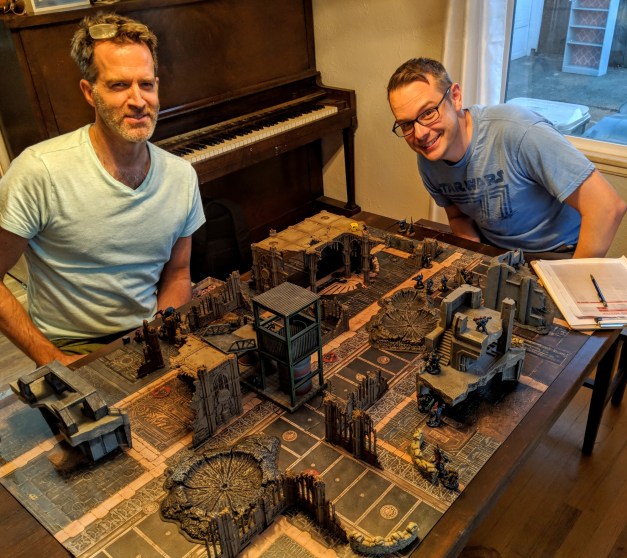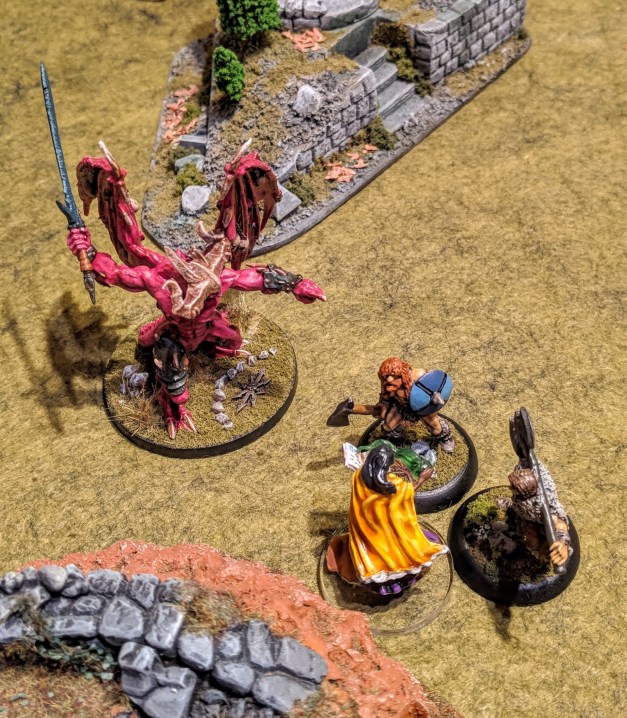
I didn’t get any painting done in September because I was gripped by terrain-building fever. I blame Vincent and our smashingly fun game of Open Combat for this. Vince is a terrain guy, just like me, and whenever we hang out, our conversation invariably turns to terrain projects.
In my case, I mentioned that I had recently acquired a mostly-complete set of Osgiliath ruins from the Lord of the Rings miniatures game. After our game, I decided to see how fast I could get them painted and ready for the tabletop.
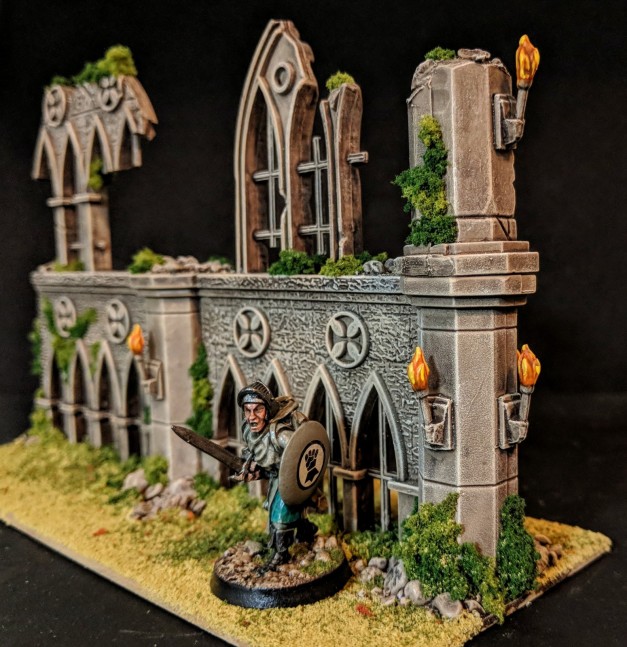
And because I am apparently a glutton for punishment, I dug around in my bin o’ terrain projects and found a bag of broken leftovers from the Pegasus cathedral kit. I’d acquired the bag from Karl, and the pieces were leftover from *his* epic Pegasus cathedral build from way back in 2014. So if I could make something useable out of the chopped-up fragments in the bag, I’d have quite an achievement on my hands!
With that in mind, I got to work. The Osgiliath ruins were mostly intact, but I stuck a few of the pieces on some foam cliffs to create a little variation in elevation (great for skirmish gaming).

The Pegasus pieces, however, needed some serious work. I took a look at what I had and decided to try to create some ruined, tumbledown church walls. So I went ahead and assembled what I had, moving quickly and trusting in the eventual flocking and clump foliage application to hide my egregious errors.

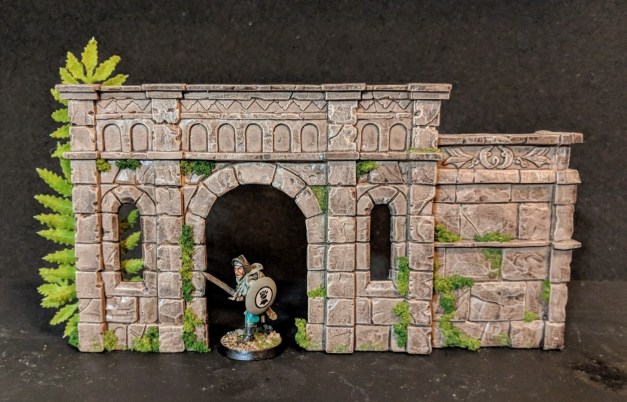
In keeping with the “fast, cheap, and tabletop-ready” mantra for these terrain items, I sprayed everything with a rattle-can of Krylon Camo light tan. Yes, that’s right — everything was going to be the same color. After the spray, I splashed on a messy layer of homebrew brown wash, made from a never-to-be-replicated recipe of Future Floor Wax, water, matte medium, and cheap acrylic craft paint.

After that, a quick dry brush of light tan, then bone white to pick out the sharpest details. All cheap craft paints. No further brushwork required — if it couldn’t show up after a wash + drybrush, then I didn’t need to see it. At least that’s what I told myself.

In fact, the only detail work I did on these pieces was to pick out the torches placed haphazardly around the church ruins. They added some nice pops of color and I’m glad I made the effort.
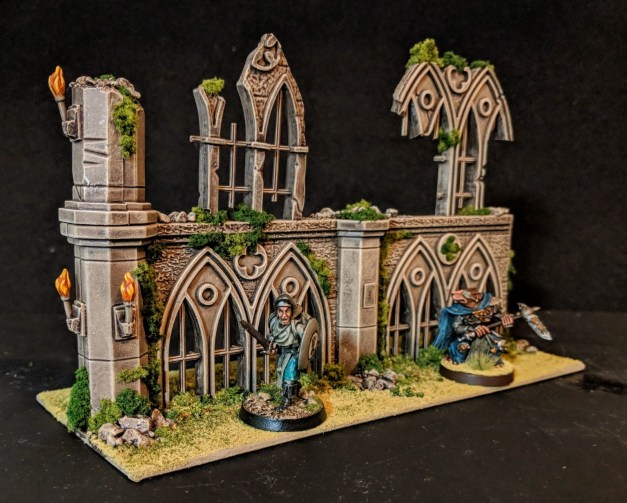
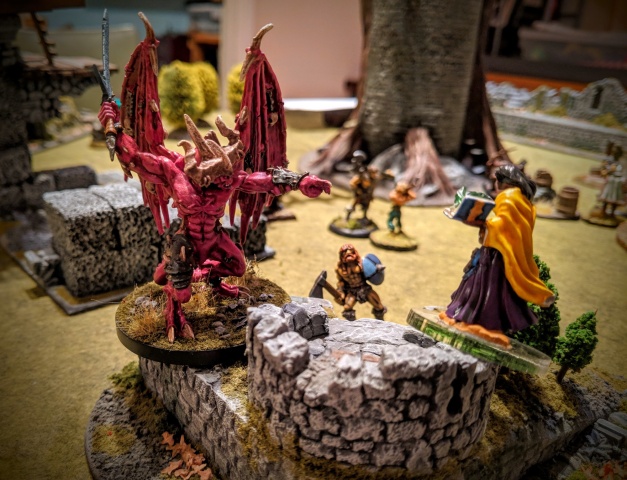
After the slapdash paint job, the real work began. The Pegasus kit was riddled with gaps, misaligned pieces, broken connectors, and all sorts of other defects. I covered all of that with clump foliage — lots and lots of clump foliage. In fact it’s no coincidence that I refer to my entire fantasy terrain collection as “Mossgrave” — I love the look of wild, overgrown fantasy ruins!

Even though I planned to do these as fast as possible, it still ended up taking me a week of evenings to get them shipshape. But I’m pleased with the results, and even more pleased that I’ve managed to add another chapter to the weird story of Karl’s secondhand Pegasus kits and all the fun we’ve had with them over the years!