We’ve settled on Hobgoblin as the game of choice for our annual holiday mega-battle (affectionally known as Apoc-Luck, since we each bring a dish and break for dinner midway through the evening).
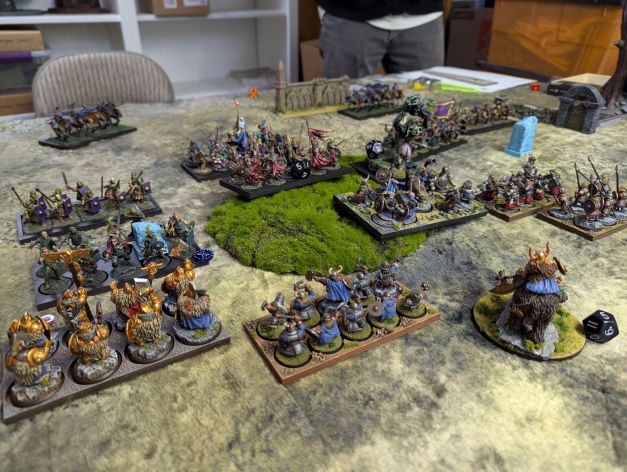
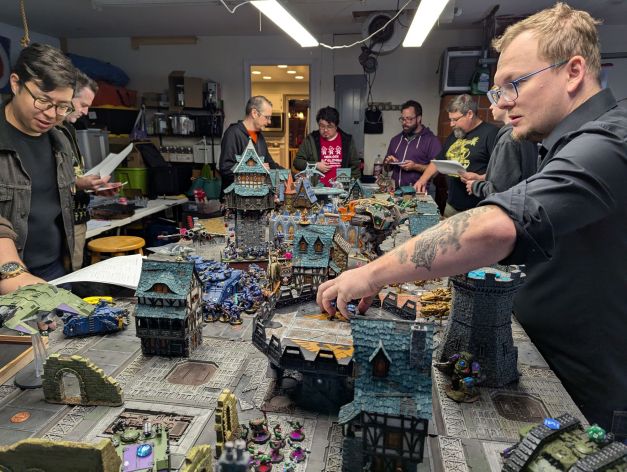
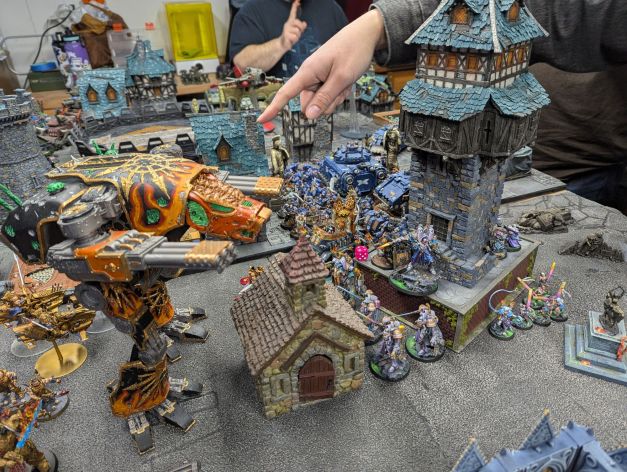
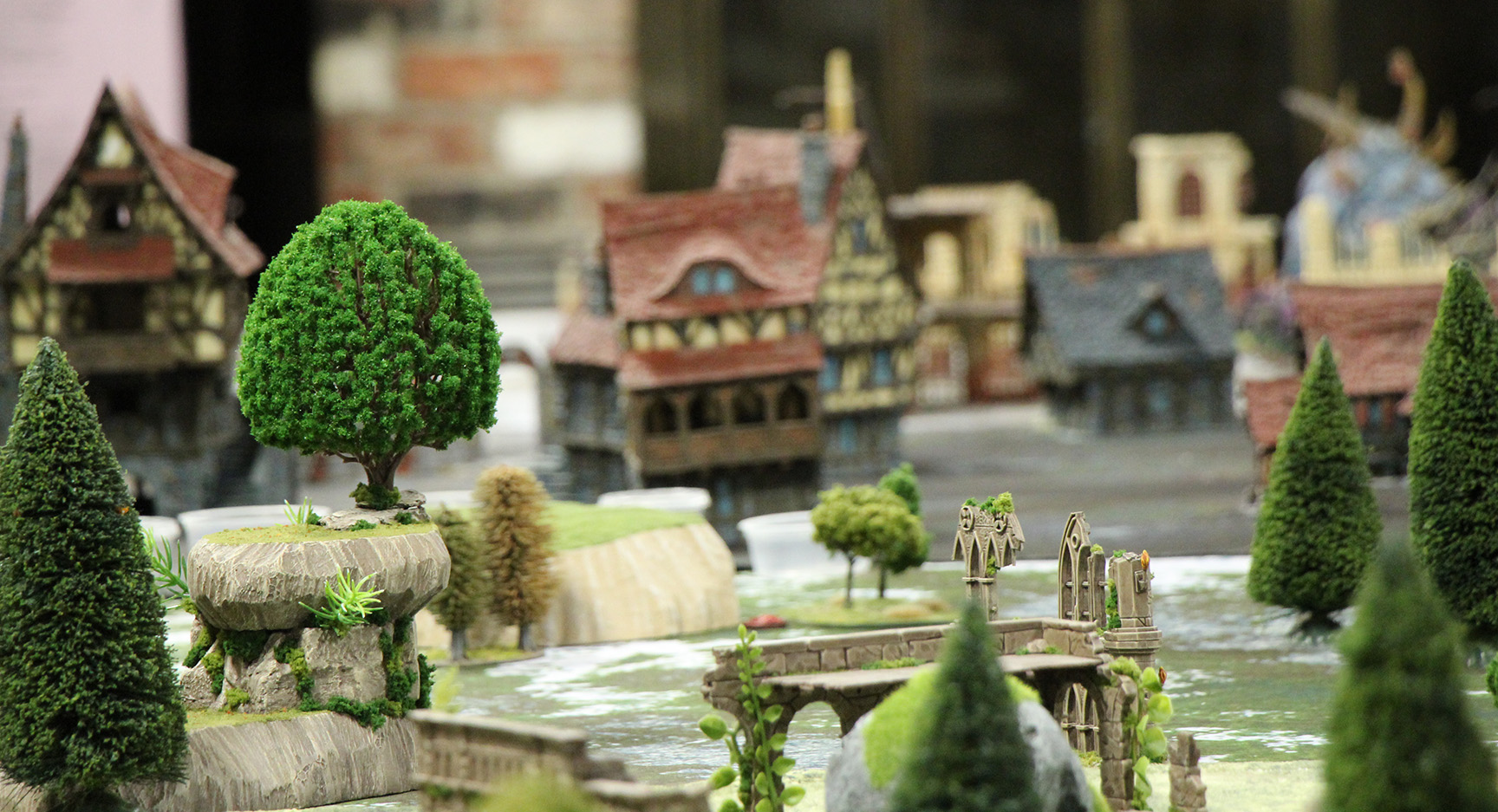
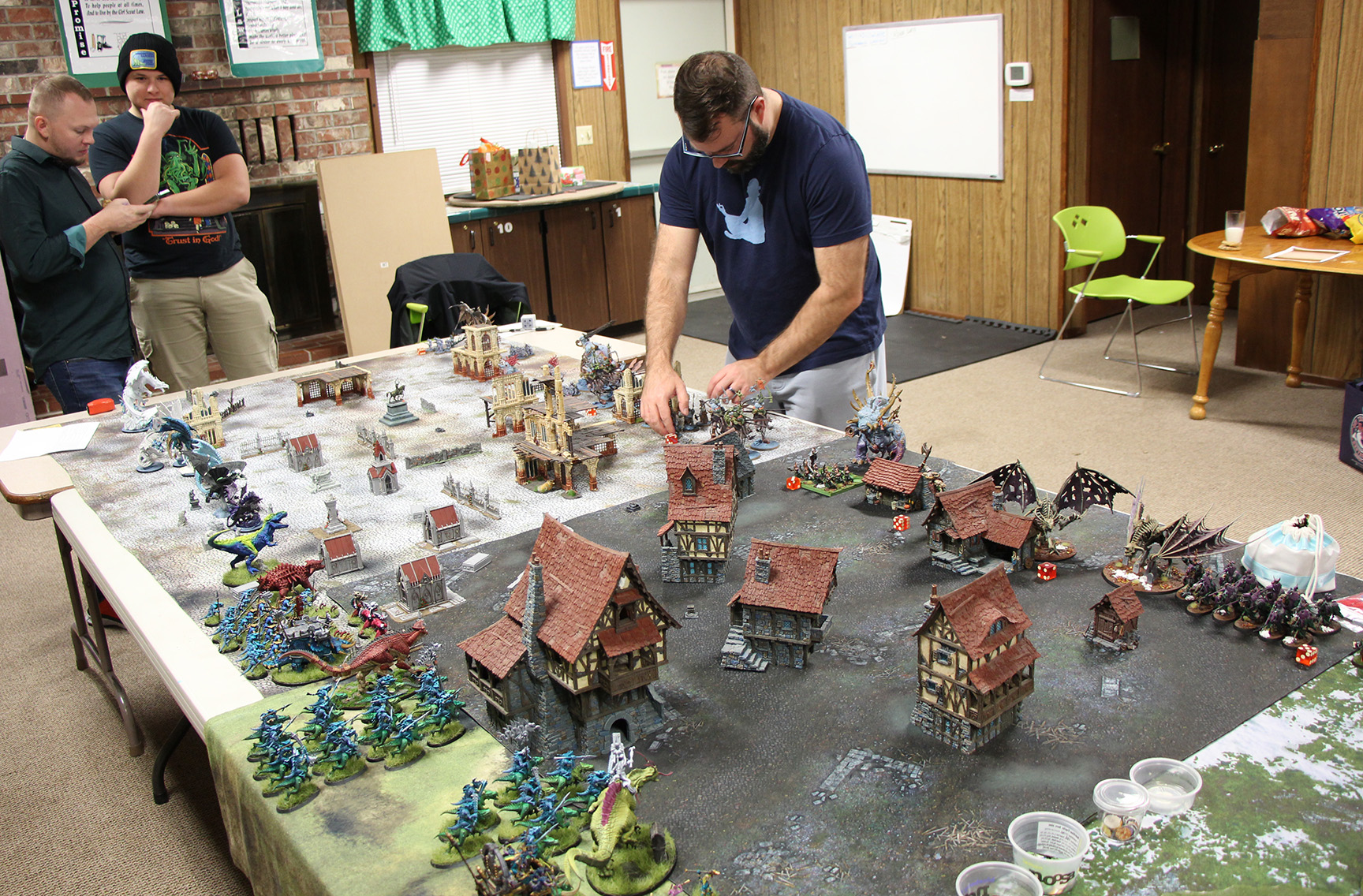
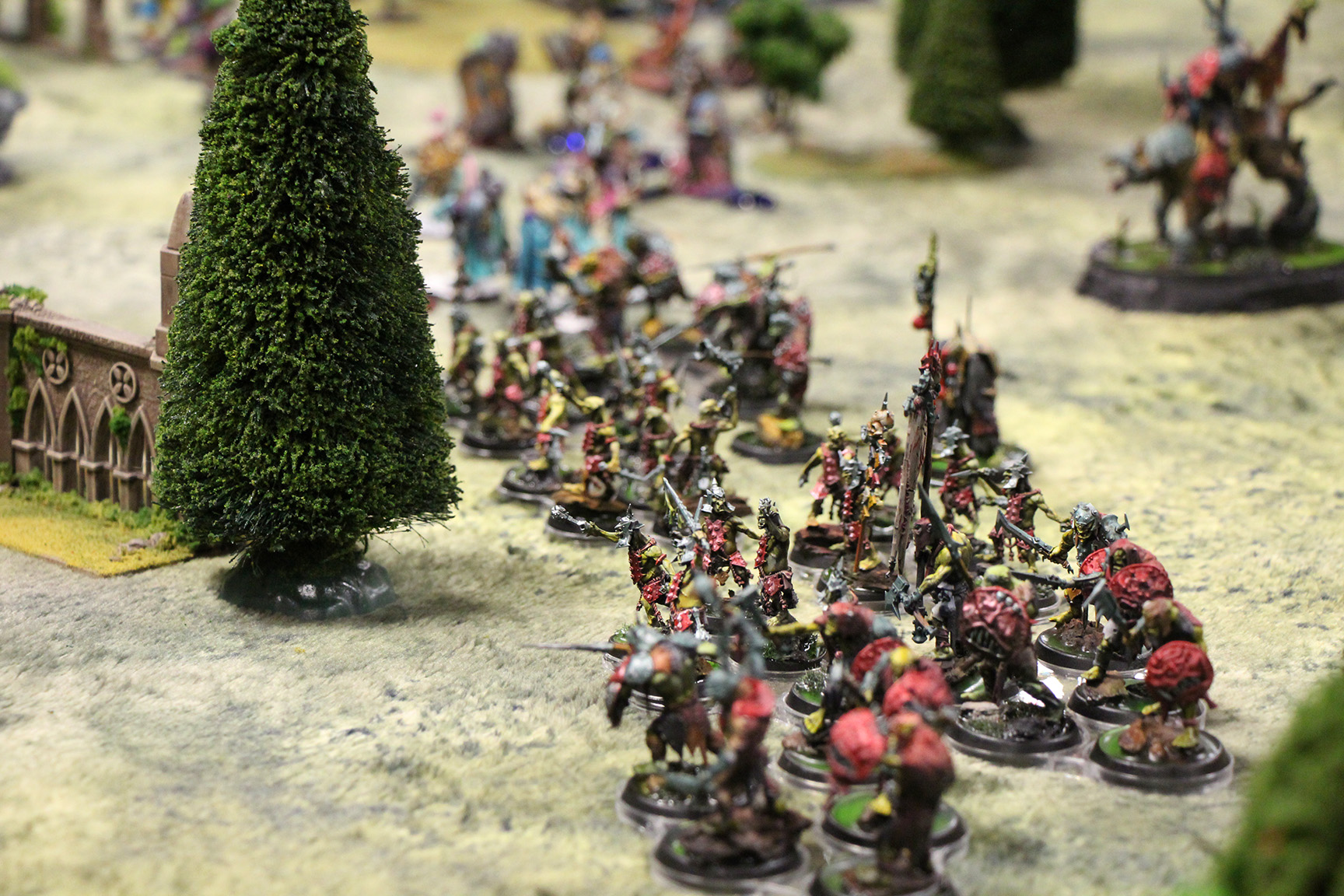
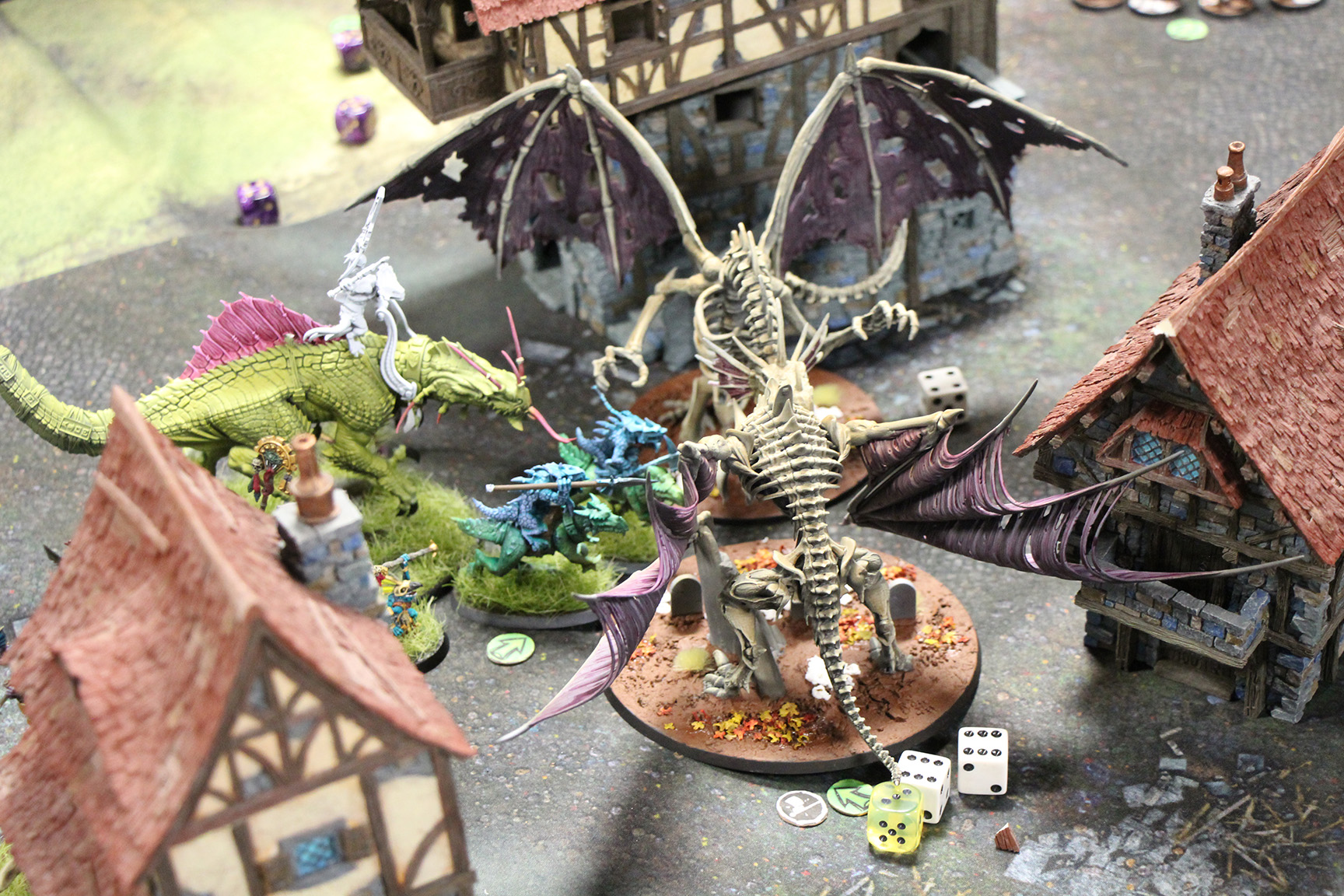
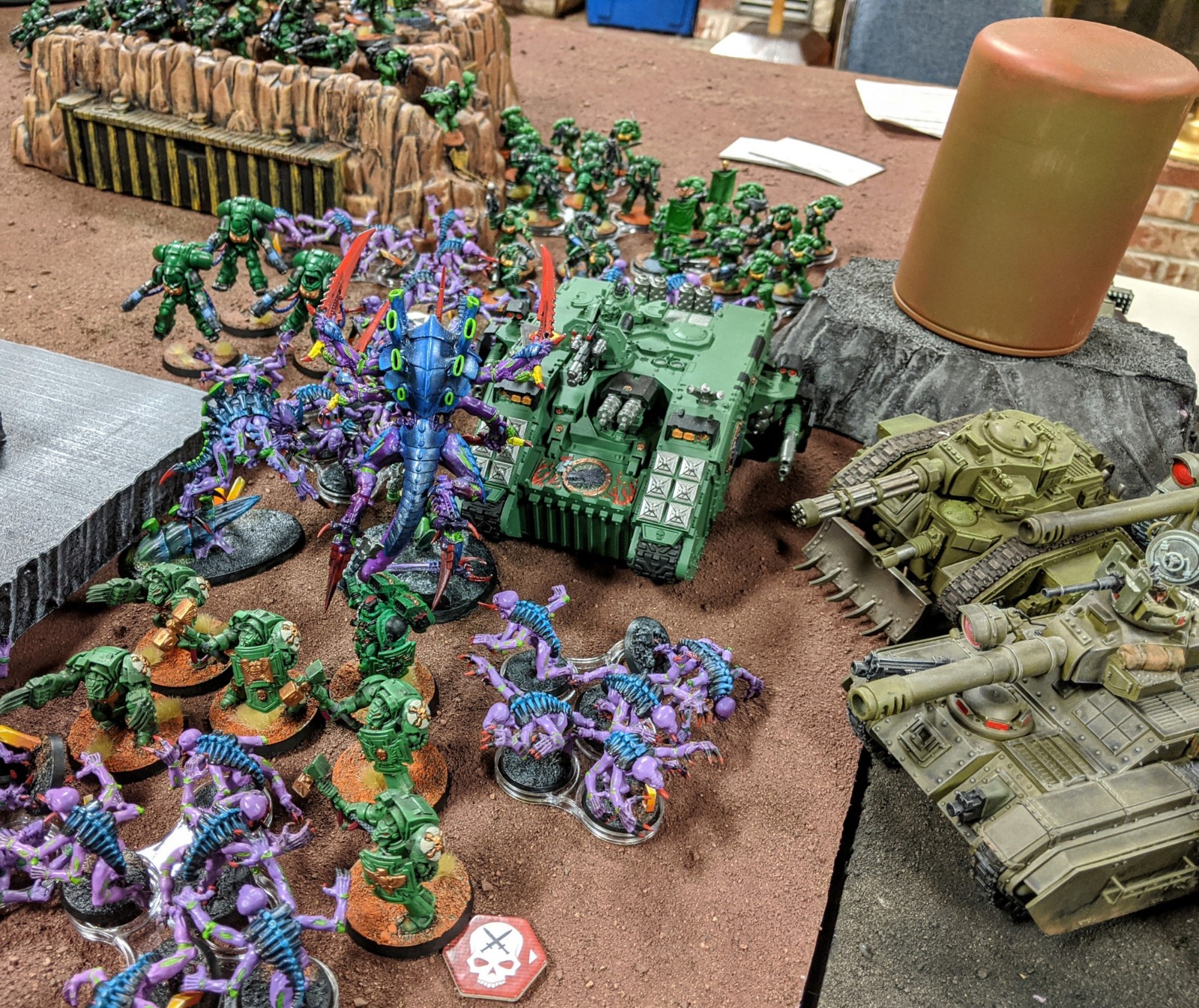
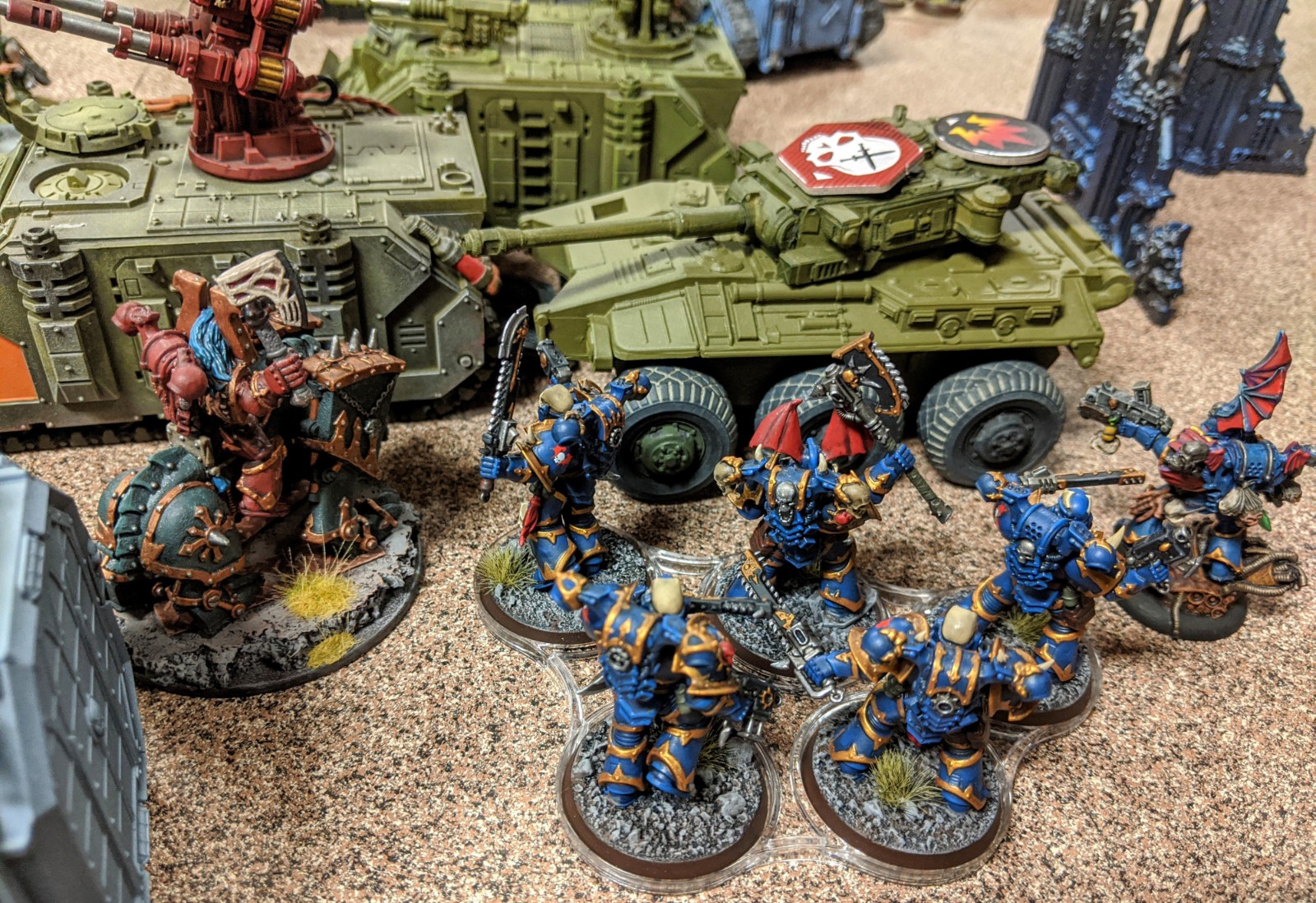
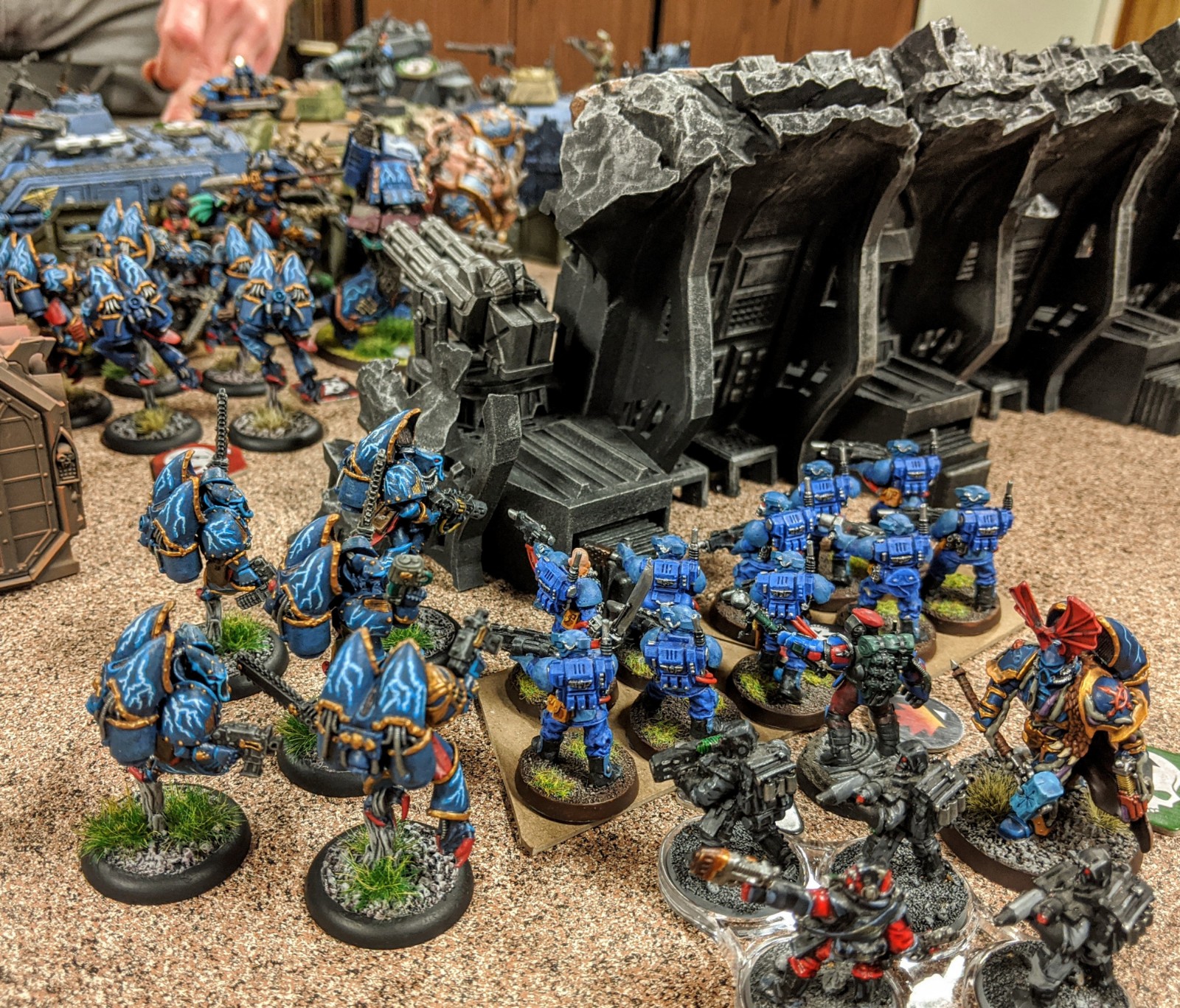
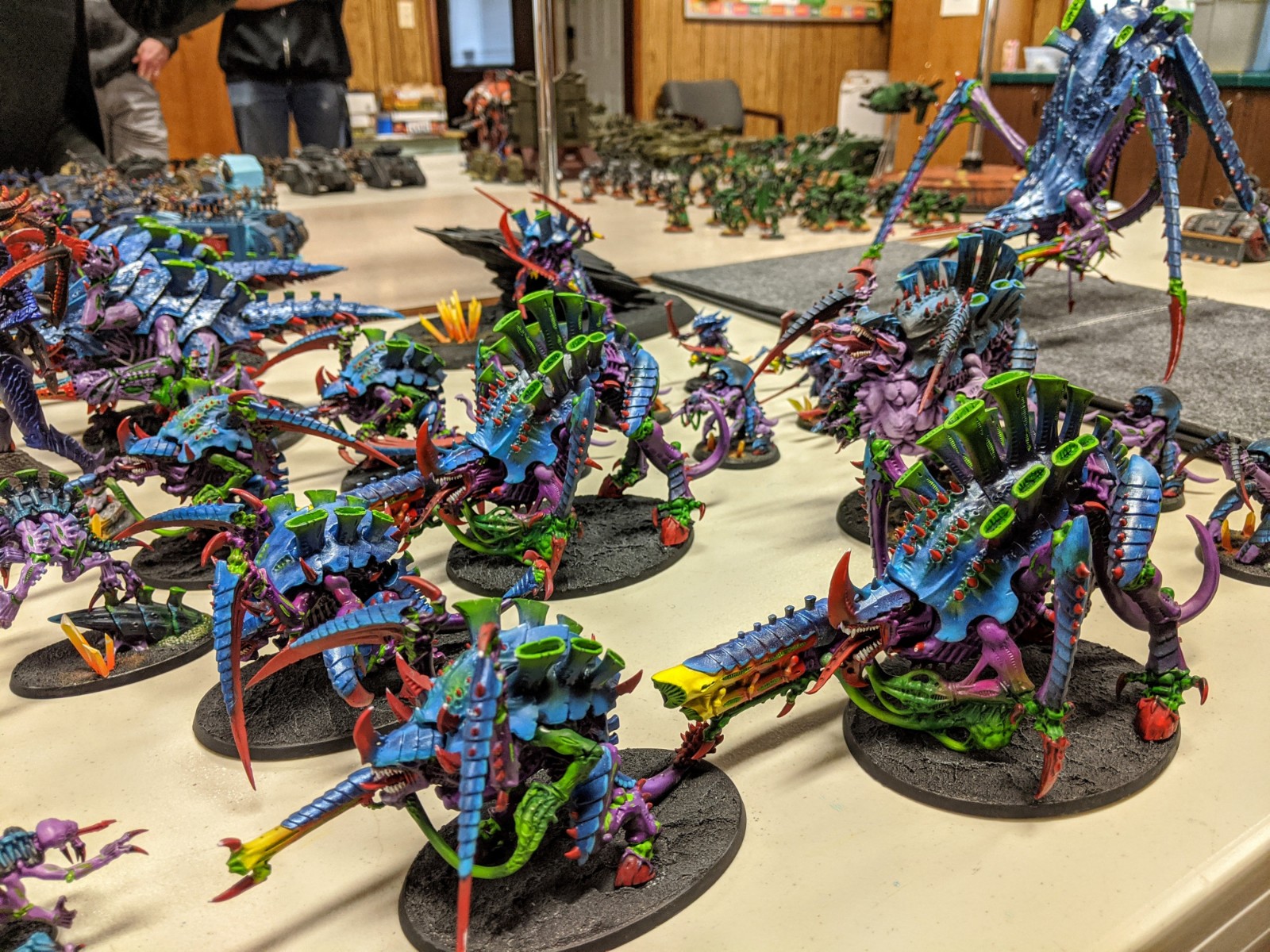
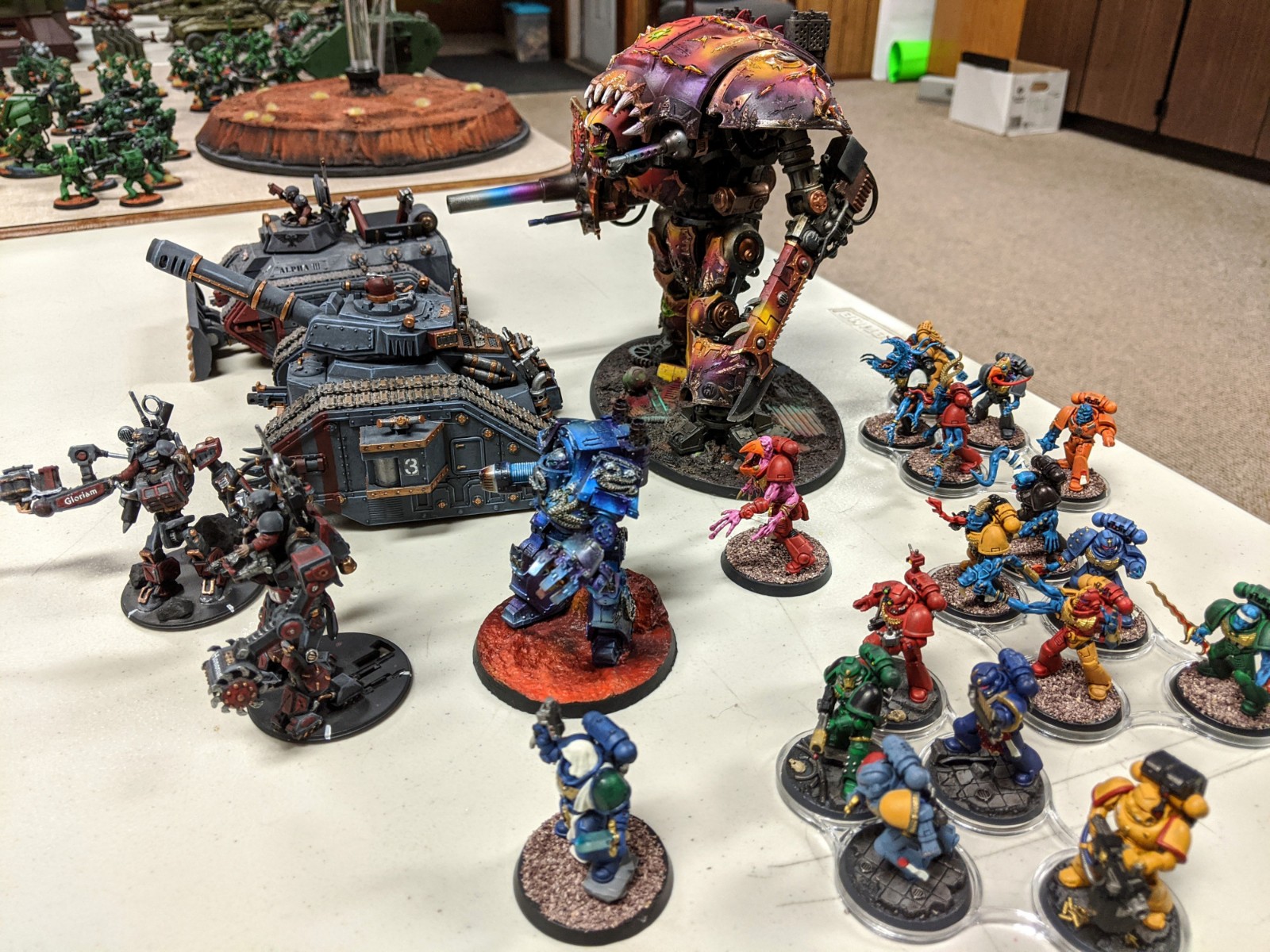
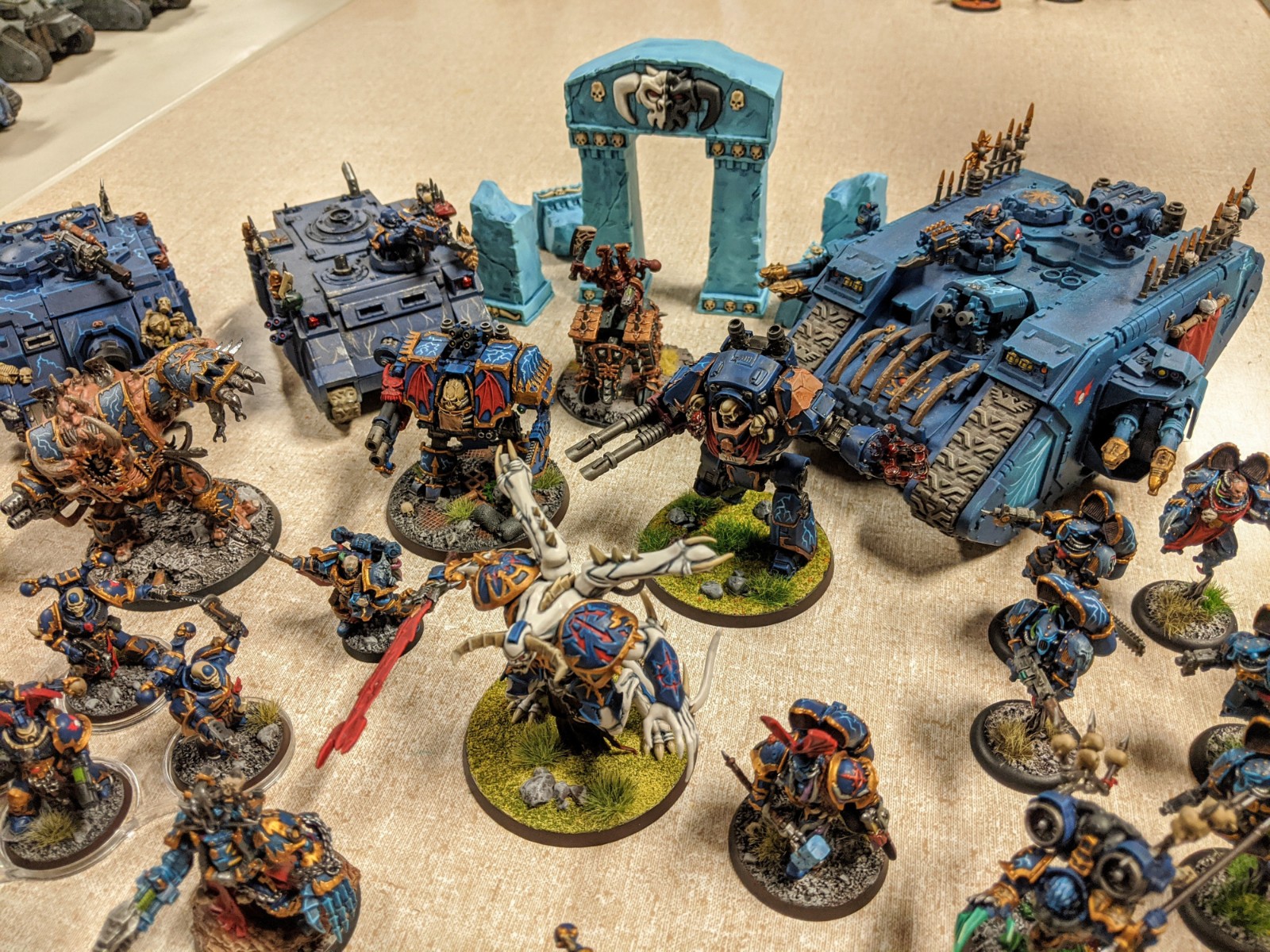
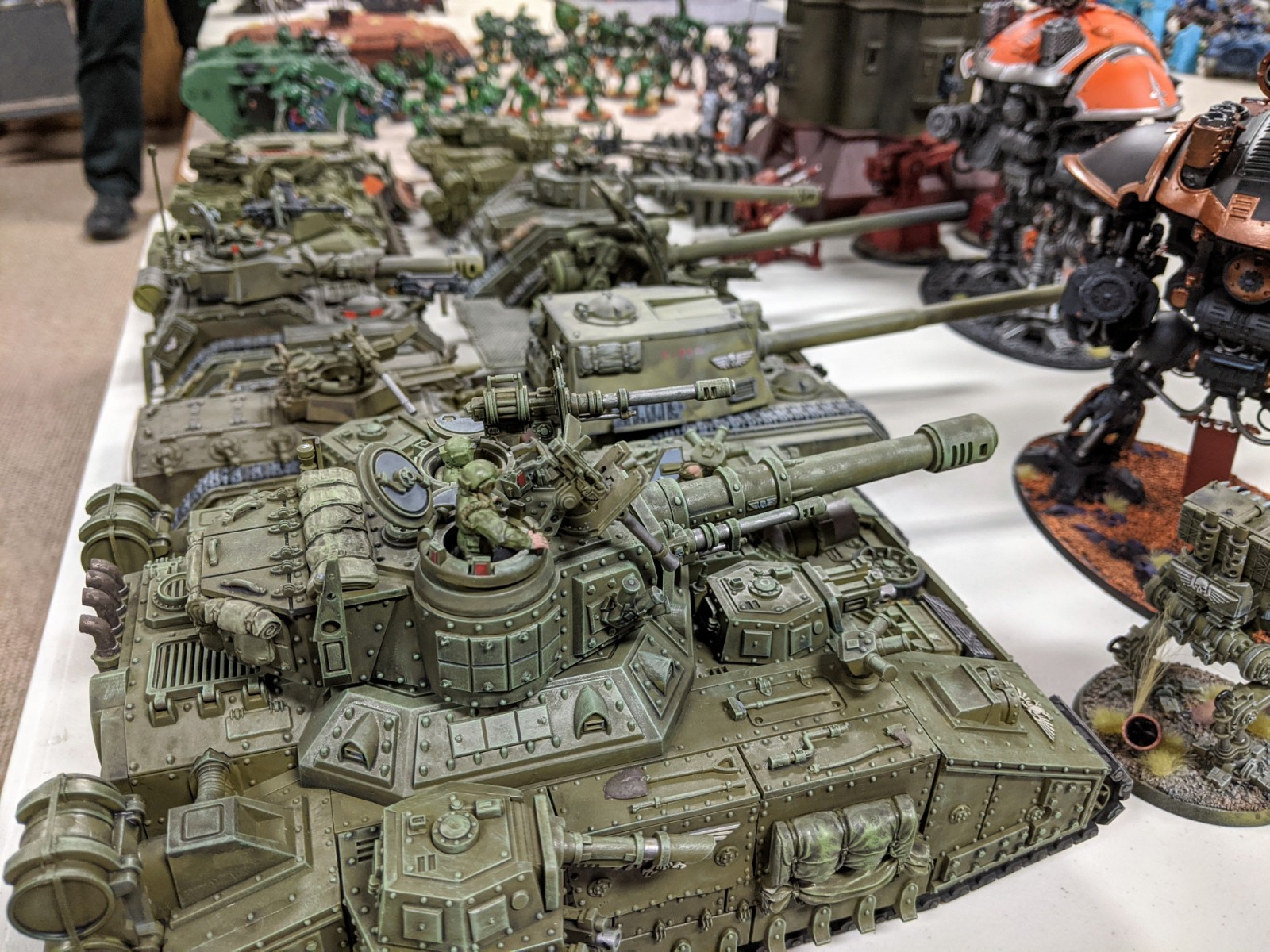
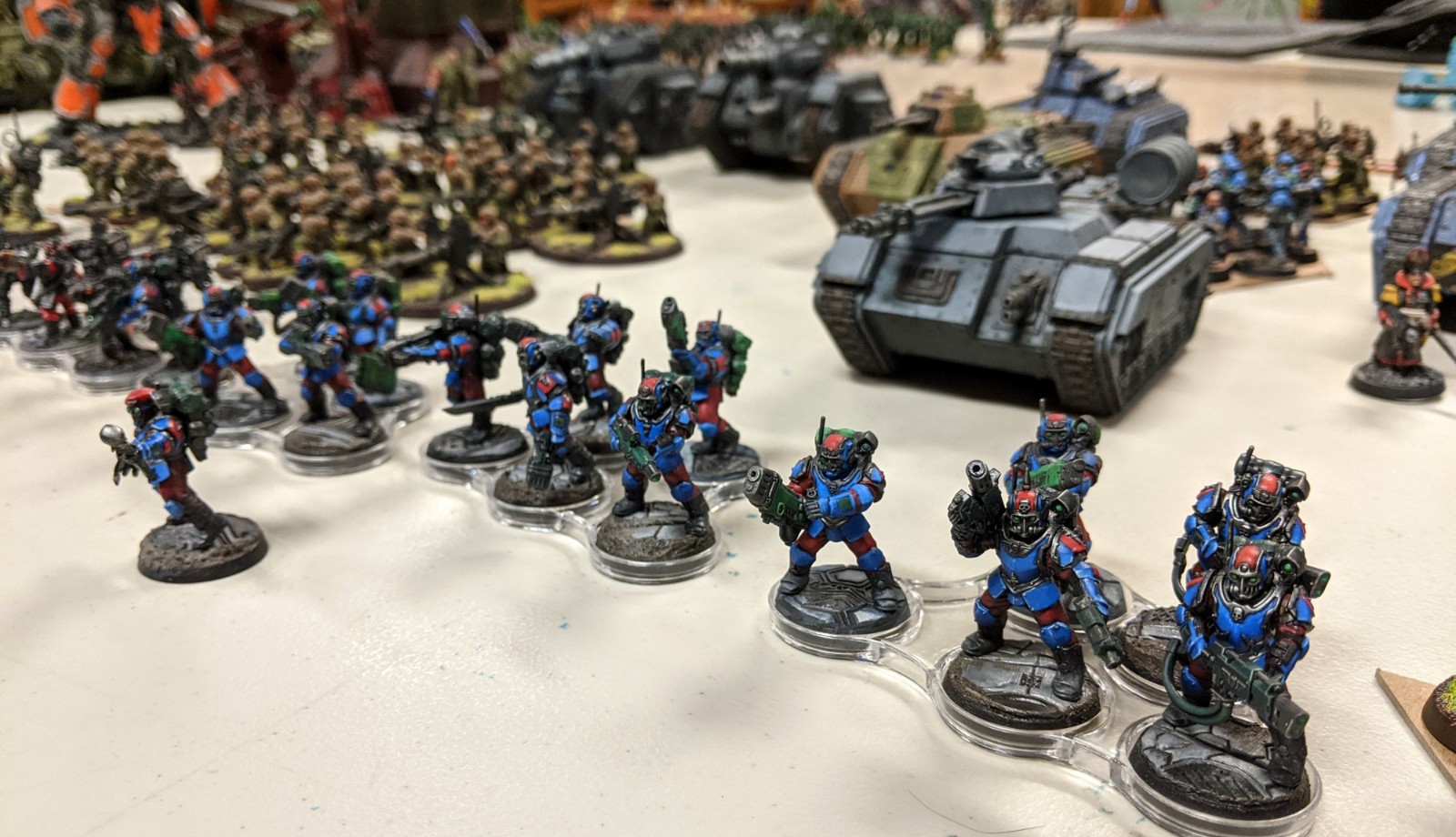
These games are typically structured around simple scenarios, with instructions to each player that can be summed up as “bring all your painted models and we’ll shoehorn everything into a game.” Game balance goes out the window in favor of a grand spectacle of beautifully painted armies clashing on the field of battle surrounded by gorgeous terrain and scenery. Here’s a pic from last year’s Apoc-Luck game which sums up the aesthetic we’re aiming for.

I’ve done a few writeups here of our previous Apoc-Luck game days; check ’em out at the links below.
- Apoc-Luck 2024 (Grimdark Future)
- Apoc-Luck 2022 (Age of Fantasy)
- Apoc-Luck 2017 (8th edition Warhammer 40k)
We’re planning a learning game of Hobgoblin later this month so other guys in the club can get up to speed on it. Personally, I think it’s an inspired choice for a mega-battle. Hobgoblin was developed specifically to accommodate this sort of play style: huge armies clashing, plenty of high drama without a lot of fussing and fiddling with modifiers and stats.
The lore of Hobgoblin is surprisingly well developed as well, which is a refreshing option after many years playing Grimdark Future and Age of Fantasy (both serviceable rulesets, of course, but bereft of lore until rather recently in their development).
So I wanted to record some thoughts and musings about Hobgoblin here, to inspire me and possibly serve other players out there who are dipping a toe in the game.
Hobgoblin is a game of matchups
In Hobgoblin, everyone builds their armies from the same core list of a dozen or so units, flavored with a short list of fun keyword abilities. Units have various to-hit target numbers based on what they’re going up against. Again, that’s shared knowledge … both your opponent and you both know that Monstrous Infantry are going to absolutely chew up ranged units or cavalry if they can get off a charge.

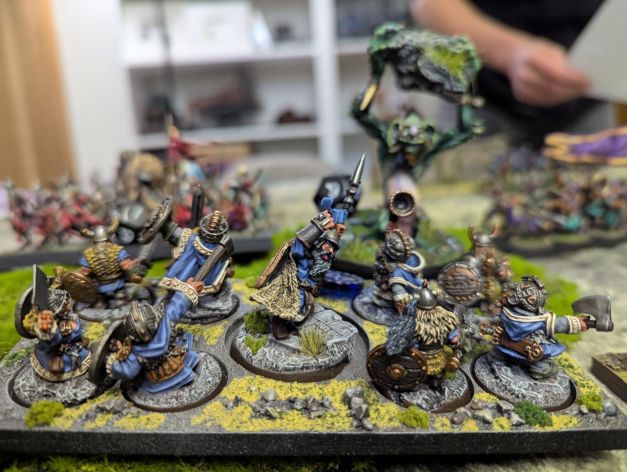
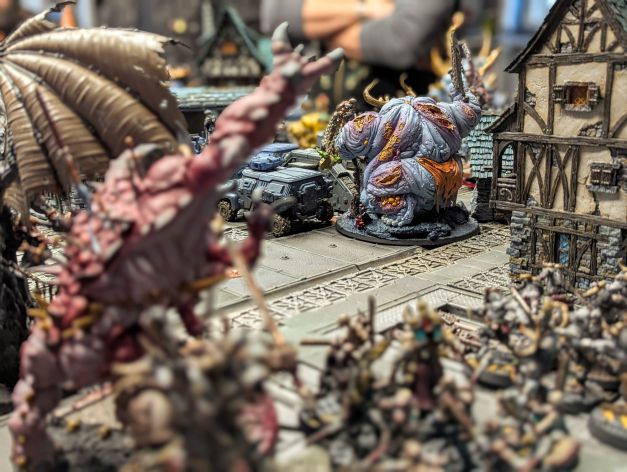
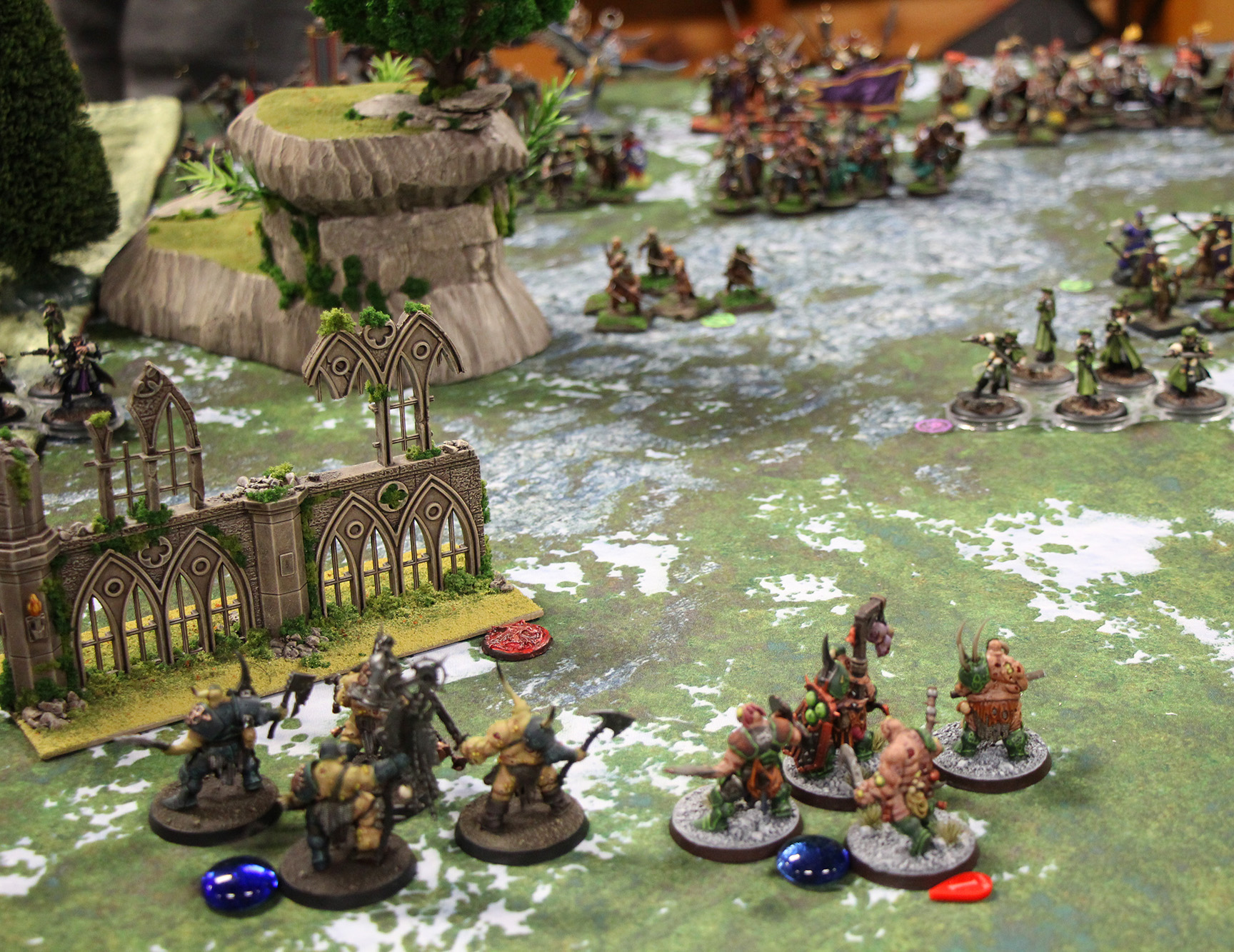
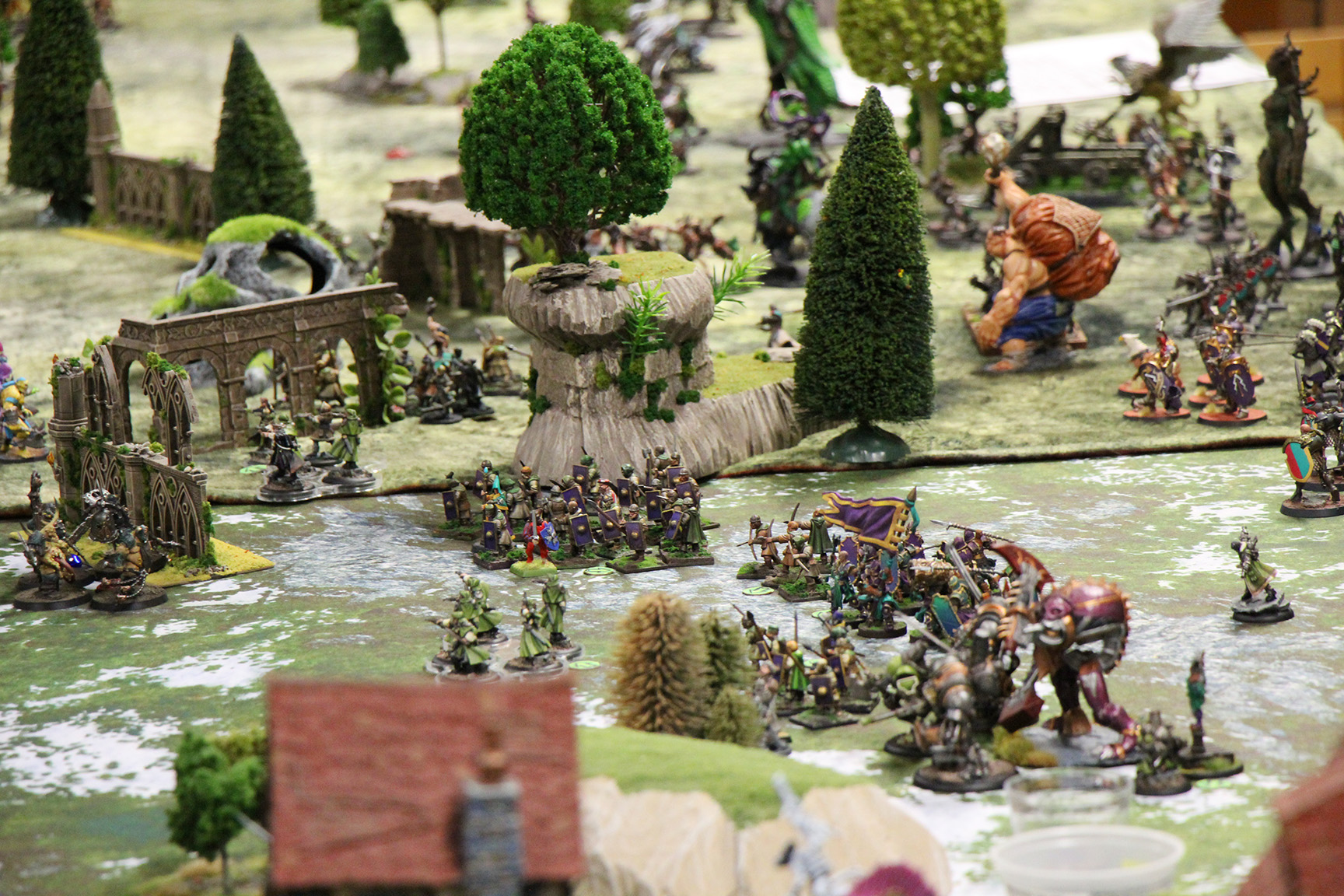
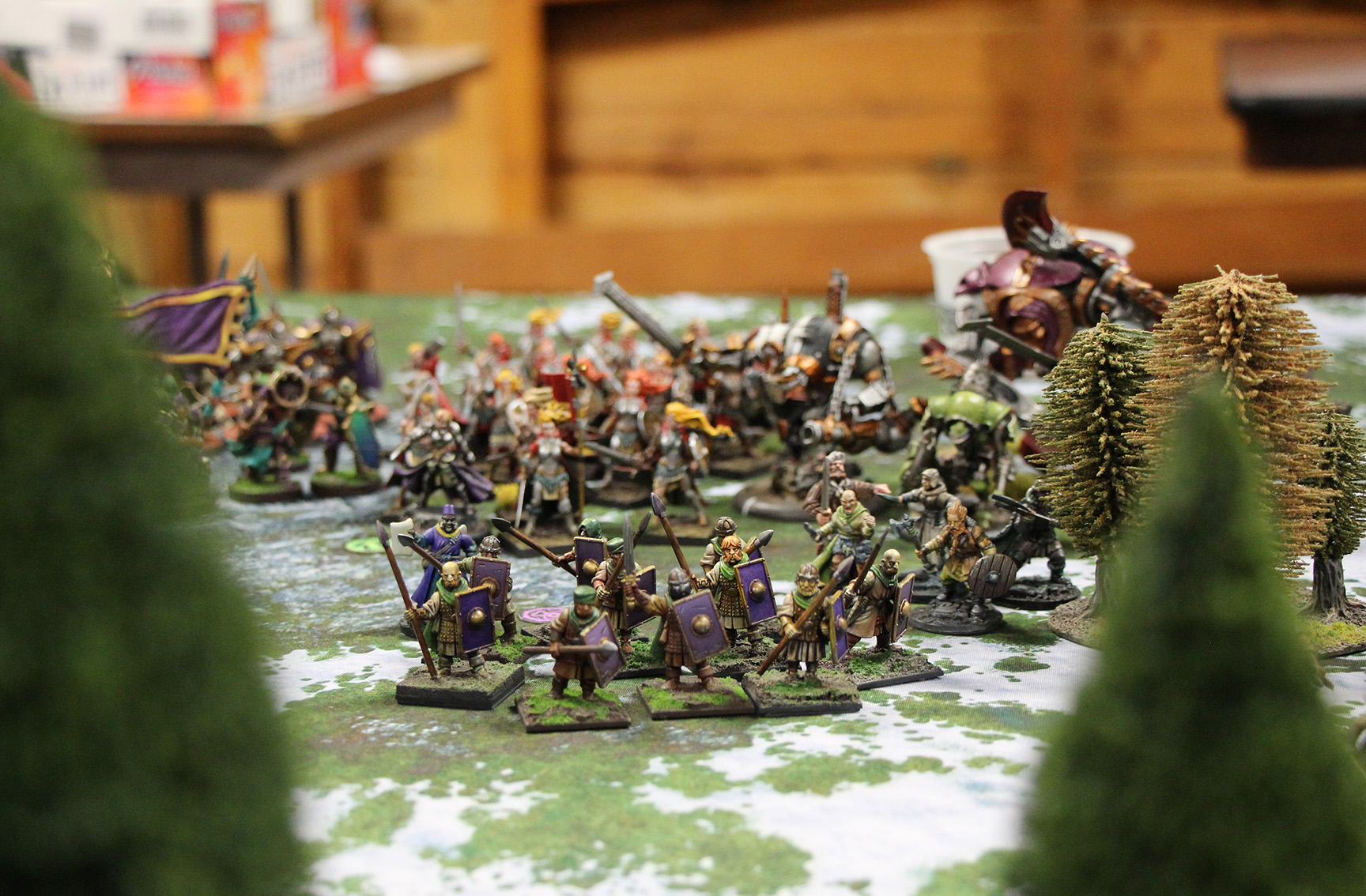
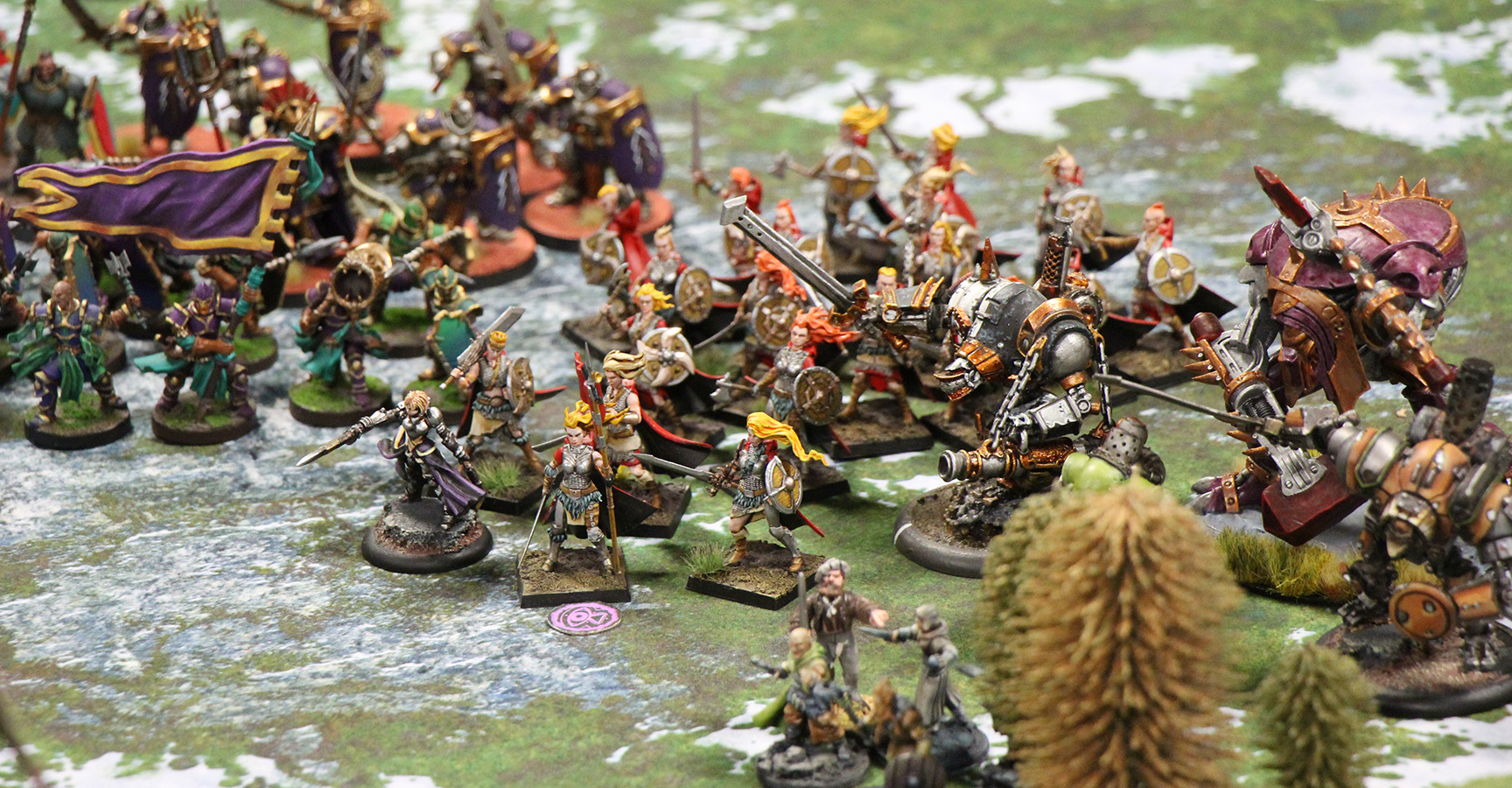
As you can see in this photo below from a game earlier this summer, John’s cave troll (a Beast, in the parlance of Hobgoblin) got in amongst my dwarven front line infantry and absolutely wrecked face with his big ol’ rock. John got the matchup he wanted, and I suffered as a result.
Doom Comes to Us All
In Hobgoblin, units don’t take casualties — they accumulate doom tokens, which slowly (or quickly, if you’re me) build up until the unit breaks and flees in terror. There are a few ways to remove doom tokens, but those techniques are really more about managing doom — delaying the inevitable — than they are about actually healing a unit up to its starting “hit points.”
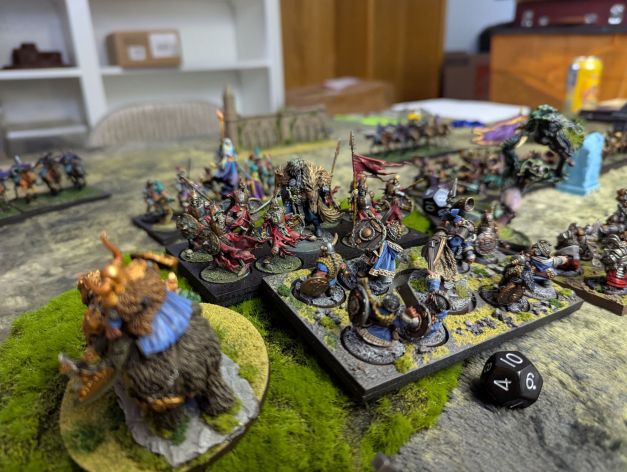
Because of that, it’s important to understand that units will die in Hobgoblin. You can count on that, and you need to position your remaining units to take advantage of that certainty. Second rank units (reinforcements, coming up behind wavering units) are very important. They can plug gaps in the line and charge a weakened unit. You can’t move through friendly or enemy units, of course. So until the front line units die, you need to carefully marshal your second rank reinforcements to ensure they’re fresh and ready to charge in when the time comes.
Magic and Cursed Artefects Are Fun and Wildly Unbalanced
If the basic units you’ll use to build your Hobgoblin army seem bog standard, the same cannot be said of the magic system. Magic in Hobgoblin is dark, terrifying, and flavorful in a way that I’ve never encountered in a game before. The schools of magic, called “Abyssal Allegiances” in Hobgoblin, are straight out of a Lovecraftian tome. They’re utterly unique, and each Allegiance offers spells that affect the game in weird and different ways.
Same with Cursed Artefacts — in a standard game, you and your opponent each select one or roll randomly. It gets assigned to one unit (usually your general) and typically gives a distinct, narrowly applicable set of abilities to your unit or army. For example, you can have both players move twice in a turn, or steal a magic point from the opposing player, or remove doom from a friendly unit.
Abyssal Allegiances are extraordinarily fun; I love the flavor behind them, and the chance to swing for the fences with a particularly potent ability. They also have the potential to whiff badly as the game plays out. You may find that you unit positioning, combined with terrain placement or unexpected casualties, means your spells don’t do much for the majority of the game. For that reason, I have a hard time evaluating their effectiveness, and I’d definitely say they’re generally unbalanced against each other. Some Abyssal Allegiances just feel outright better in most circumstances. Of course, that makes a player like me much more likely to try to force the issue and make a “weaker” Allegiance work.
So all in all, I’m excited to dig into Hobgoblin this month, and to build a gigantic list for next month’s Apoc-Luck game. Stay tuned for more!

































 Comrade's Wargames